Top Rated Pool Installers Near You: 2025 Comparison Guide
Finding the right pool installer can feel like navigating a maze of contractors, quotes, and conflicting advice—especially when you're not sure what questions to ask or what a fair price even looks like. The wrong choice means months of delays, budget overruns, and a backyard that looks like a construction zone far longer than it should.
This guide walks you through how to evaluate pool installers, compare different pool types and their installation requirements, and ask the questions that separate reliable professionals from the ones who'll leave you with headaches.
How to Find Top Rated Pool Installers in Your Area
The best pool installers near you are typically found through online directories like Yelp, Angi, and Houzz, where verified customer reviews and ratings help you compare contractors side by side. Local referrals from neighbors or friends who've recently completed pool projects often lead to the most reliable recommendations, since you can see the finished work firsthand and ask honest questions about the experience.
Your local building department can also provide a list of licensed contractors in good standing—a resource many homeowners overlook. And if you're considering a specific pool type, manufacturers often maintain lists of certified installers trained on their products.
Before diving deeper, it helps to understand the difference between a pool installer and a pool builder. A pool builder typically handles custom construction from the ground up, designing and building concrete or gunite pools from scratch. A pool installer, on the other hand, specializes in setting up and assembling pool systems—fiberglass shells, vinyl liners, stock tank pools, or modular units. Some companies do both, while others focus exclusively on one approach.
When searching online, pay attention to:
Consistent recent reviews: Look for patterns in feedback from the past year, not just overall ratings
Project photos: Evidence of completed work similar to what you're envisioning
Response time: How quickly they reply to inquiries often reflects how they'll communicate throughout your project
Service area clarity: Confirm they work in your specific location before investing time in consultations
What to Look for in a Quality Pool Installer
Taking time to vet installers upfront prevents the headaches that come with poor communication, unexpected costs, and subpar workmanship. A little due diligence now saves significant frustration later.
Licensing and Insurance Requirements
Every reputable pool installer carries proper licensing and insurance coverage, though the specific requirements vary by state and municipality. Your local building department can tell you exactly what credentials are required in your area.
At minimum, verify that any installer you're considering has general liability insurance and workers' compensation coverage. General liability protects you if the installation damages your property, while workers' comp covers injuries to crew members on your site. Without these, you could be financially responsible for accidents that happen during the project.
Customer Reviews and Testimonials
Reviews on Google, Yelp, Angi, and Houzz offer valuable insight into how an installer actually operates day to day. Rather than focusing on star ratings alone, read through the comments looking for patterns—consistent praise for clear communication, staying on schedule, and quality craftsmanship signals a reliable contractor.
Be cautious of profiles with only five-star reviews and vague, generic comments like "Great job!" or "Highly recommend!" Authentic reviews typically include specific details about the project. Negative reviews aren't automatically disqualifying either; what matters is how the company responds to criticism and whether they work to resolve issues.
Portfolio of Completed Projects
Ask potential installers for photos of projects similar to yours in scope, style, and yard conditions. If you have a sloped backyard, you want to see how they've handled slopes before. If you're interested in a compact plunge pool, look for examples of small-space installations.
When possible, request references from past customers and actually follow up with them. A quick phone call with someone who's been through the process can reveal insights about timeline accuracy, crew professionalism, and post-installation support that reviews might not capture.
Warranty and After Installation Support
Quality installers stand behind their work with clear warranty coverage. It's worth understanding the difference between two types: workmanship warranties cover installation errors (like improper leveling or faulty connections), while equipment warranties cover pumps, filters, heaters, and other components.
Ask specifically about ongoing support as well. Some installers offer maintenance packages or seasonal service visits, while others can recommend trusted local providers. Knowing who to call when something needs attention makes pool ownership much smoother.
Transparent Pricing and Contracts
Red flags include vague estimates, pressure to sign quickly, and requests for large upfront payments. A professional installer provides itemized quotes that break down labor, materials, equipment, permits, and any additional costs so you can see exactly where your money goes.
Get everything in writing before work begins. Your contract should specify the complete scope of work, payment schedule, projected timeline, and warranty terms. If something isn't in the contract, assume it isn't included.
Pool Installation Types Compared
The best installer for your project depends largely on the type of pool you want, since each requires different expertise, equipment, and timelines. Here's how the main options compare:
Pool Type | Installation Time | Best For | Maintenance Level |
|---|---|---|---|
Concrete/Gunite | 3-6 months | Custom designs, large budgets | High |
Fiberglass | 2-4 weeks | Mid-range budgets, faster timeline | Medium |
Stock Tank/Plunge | 1 day | Small yards, budget-conscious | Low-Medium |
Vinyl Liner | 2-4 weeks | Flexible shapes, moderate cost | Medium |
Above Ground | 1-3 days | Entry-level, portability | Low-Medium |
Concrete and Gunite Pools
Concrete and gunite pools offer complete customization—any shape, size, depth, or feature is possible. Gunite is actually a specific application method where concrete is sprayed onto a rebar framework, creating an extremely durable shell. These pools require specialized contractors and the longest installation timeline, often taking three to six months from groundbreaking to first swim.
The trade-off for all that flexibility is higher ongoing maintenance, including regular resurfacing every 10-15 years and more intensive chemical balancing. Concrete pools work best for homeowners with larger budgets and patience for extended construction.
Fiberglass Pools
Fiberglass pools arrive as pre-formed shells manufactured off-site, then delivered by truck and lowered into an excavated hole by crane. This approach reduces installation time by 30% compared to concrete, typically completing in two to four weeks once the shell arrives.
The limitation is shape and size options—you're choosing from the manufacturer's existing molds rather than designing from scratch. However, modern fiberglass pools come in dozens of configurations, and the smooth gel-coat surface resists algae growth better than concrete.
Stock Tank and Plunge Pools
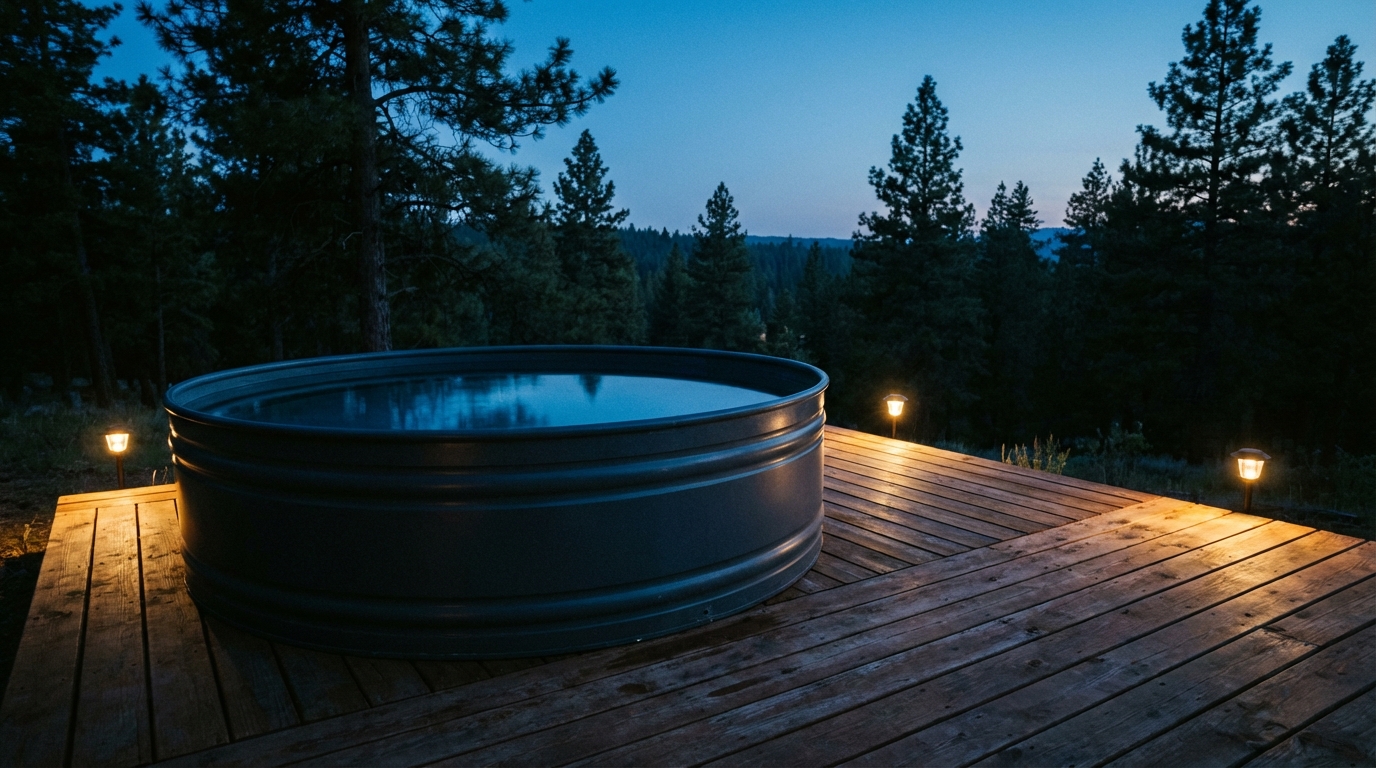
Stock tank pools started as galvanized steel water troughs designed for livestock, but they've become increasingly popular as stylish, affordable backyard pools. Professional installation adds proper filtration, heating, and water treatment systems, transforming a simple tank into a legitimate swimming experience.
The biggest advantage is speed—stock tank and plunge pool installations often complete in a single day. They're particularly well-suited for smaller yards, budget-conscious homeowners, and anyone who wants a backyard oasis without months of construction disruption. In climates with intense sun and temperature swings, like Colorado's high-altitude environment, properly configured stock tank pools perform reliably when equipped with appropriate components.
Vinyl Liner Pools
Vinyl liner pools use a flexible vinyl sheet stretched over a frame structure, offering more shape flexibility than fiberglass at a lower cost than concrete. Installation typically takes two to four weeks, placing them in the middle ground for both timeline and budget.
The liner itself requires replacement every 5-9 years depending on care and sun exposure, which adds to long-term ownership costs. However, liner replacement is far less expensive than concrete resurfacing.
Above Ground Pools
Above ground pools represent the most affordable entry point into pool ownership and can be installed in one to three days. While many homeowners attempt DIY installation, professional setup ensures proper leveling, electrical connections, and structural integrity.
These pools offer portability—you can disassemble and take them if you move—and typically require less permitting than inground options. Modern above ground pools have come a long way aesthetically, with options that look far more polished than the basic round pools of decades past.
Pool Installation Costs by Type
Pool installation costs vary dramatically based on type, size, site conditions, and add-on features, with in-ground pools averaging $66,000 nationally. Rather than citing specific dollar amounts that fluctuate by region and change over time, understanding the primary cost drivers helps you budget realistically and compare quotes accurately.
Pool Type | Relative Cost | Primary Cost Drivers |
|---|---|---|
Concrete/Gunite | High | Custom design, excavation, finishing materials |
Fiberglass | Medium-High | Shell cost, crane rental, excavation |
Stock Tank/Plunge | Low | Equipment quality, professional setup |
Vinyl Liner | Medium | Excavation, liner quality, frame materials |
Above Ground | Low | Pool kit quality, deck additions |
Beyond the pool itself, major factors affecting your final cost include site preparation (tree removal, ground leveling, drainage solutions), permit fees, electrical work for pumps and lighting, and optional features like heating systems, automatic covers, or surrounding decking.
Stock tank and plunge pools offer the most cost-effective path for homeowners wanting a quick backyard transformation without the substantial investment of traditional inground construction.
Questions to Ask Before Hiring a Pool Installer
Asking specific questions helps you compare installers accurately and surface potential issues before they become expensive surprises. Reputable installers welcome thorough vetting—it's the less professional ones who get evasive.
Timeline and Installation Process Questions
How long will the complete installation take from deposit to first swim?
What site preparation is required before your crew arrives?
Who handles permits, and are permit fees included in your quote?
What happens if weather or supply chain issues cause delays?
Will I have a single point of contact throughout the project?
Pricing and Payment Structure Questions
Is your estimate itemized by labor, materials, equipment, and permits?
What's included in this price, and what would be considered an add-on?
What's your payment schedule—deposit amount and milestone payments?
How do you handle change orders if unexpected site conditions arise?
Maintenance and Warranty Questions
What warranty coverage do you provide on your workmanship?
What equipment warranties apply, and who handles warranty claims?
Do you offer ongoing maintenance services after installation?
What actions on my part would void the warranty?
How to Compare Pool Installation Quotes
Comparing quotes isn't simply about finding the lowest number—scope, quality, and service matter just as much as price. A thorough comparison protects you from choosing an installer who cuts corners or surprises you with hidden costs after work begins.
1. Request Itemized Estimates
Ask each installer to break down costs by labor, materials, equipment, permits, and site work. Lump-sum quotes make it impossible to understand what you're actually paying for or to compare offerings fairly. When estimates are itemized, you can see exactly where one installer costs more than another and ask why.
2. Verify Scope of Work Included
Check exactly what each quote covers: excavation, electrical connections, plumbing, decking or patio work, fencing, landscaping restoration, and final cleanup. Note what's explicitly excluded so you can factor those costs into your comparison or request them as add-ons.
3. Check for Hidden Costs
Common surprise costs include permit fees, soil removal (especially if you have rocky ground), utility relocation, and landscaping repair after heavy equipment leaves. Ask directly: "What additional charges might come up based on site conditions?" A straightforward installer will walk you through the possibilities.
4. Evaluate Payment Terms and Schedule
Avoid installers requesting full payment upfront—this is a significant red flag. A reasonable structure typically involves a deposit of 10-30%, progress payments at defined milestones (excavation complete, equipment installed, etc.), and final payment upon completion and your satisfaction.
Faster Alternatives to Traditional Pool Installation
Traditional inground pool construction involves months of excavation, forming, curing, finishing, and landscaping restoration. For homeowners who want results faster, several alternatives deliver a quality pool experience on a compressed timeline.
One Day Pool Installation Options
Stock tank pools and certain plunge pools can be delivered, set up, and ready for use in a single day. Turnkey services handle everything from delivery to equipment installation to filling with water—you could realistically be swimming by evening.
This approach eliminates the weeks of yard disruption, contractor coordination, and waiting that traditional builds require. For rental property owners or anyone preparing for a specific event, one-day installation offers obvious advantages.
Turnkey Pool Packages
Turnkey installation means everything is included from initial consultation through your first swim—no coordinating separate contractors for site prep, plumbing, electrical, and finishing. One team handles the entire process, which simplifies communication and accountability.
This approach is particularly valuable for busy homeowners who don't have time to manage a complex project and for commercial clients like Airbnb hosts or property managers who want professional results without the project management burden.
Prefabricated and Modular Pool Solutions
Modular pools are factory-built complete units delivered to your property ready for installation. Unlike traditional construction that happens entirely on-site, modular pools arrive with plumbing, jets, and finishing already in place. Installation involves site preparation, placement, and final connections rather than ground-up building.
These solutions offer a middle ground between traditional construction and simpler options, with minimal site disruption and faster timelines than concrete or gunite.
How to Choose the Best Pool Installer for Your Home
Matching your priorities to the right installer type leads to the best outcome. Consider what matters most: Is budget your primary constraint? Timeline? Yard size? Aesthetic preferences? The answers point you toward different solutions.
For homeowners wanting a stylish backyard retreat without months of construction, stock tank pool specialists offer professional installation with concierge-level support from consultation through first swim. Colorado homeowners specifically benefit from working with installers experienced in high-altitude and desert climate conditions, where equipment selection and installation techniques require adaptation for reliable year-round performance.
Ready to explore your options? Request a custom installation quote to connect with a team that specializes in one-day pool transformations across Colorado.
FAQs About Finding the Best Pool Installers
How long does a typical pool installation take from start to finish?
Timeline varies dramatically by pool type. Concrete and gunite pools often require three to six months from groundbreaking to completion. Fiberglass installations typically complete in two to four weeks once the shell arrives. Stock tank and plunge pool installations can be finished in as little as one day with turnkey service.
Do I need a permit to install a backyard pool?
Permit requirements vary by municipality and pool type. Most inground pools require permits covering construction, electrical, and sometimes fencing. Smaller above-ground options and stock tank pools may have fewer requirements depending on local codes. Your installer typically handles or guides you through the permitting process.
What pool types work best in high altitude or desert climates?
Pools engineered for significant temperature fluctuations and intense UV exposure perform best in challenging Western conditions. Stock tank pools configured with appropriate filtration, heating, and treatment equipment handle high-altitude environments reliably when installed by specialists familiar with regional demands.
Can a pool be installed in a small backyard?
Yes. Compact options like stock tank pools and plunge pools are designed specifically for smaller spaces, delivering a refreshing swim experience in yards where traditional inground pools wouldn't fit or would overwhelm the landscape.
What is the difference between a pool builder and a pool installer?
Pool builders typically handle custom concrete or gunite construction, managing design and building from raw materials. Pool installers specialize in setting up prefabricated systems—fiberglass shells, vinyl liners, stock tank pools, or modular units. Some companies offer both services.
How do I prepare my yard before pool installation begins?
Your installer will provide specific guidance based on pool type and site conditions. Generally, ensure clear access for equipment and delivery vehicles, confirm underground utility locations with your local utility company, and address any obvious drainage issues beforehand.
What ongoing maintenance is required after a pool is installed?
All pools require regular water chemistry balancing, filter cleaning, and seasonal care, typically costing $3,000 to $6,000 annually. Specific maintenance schedules depend on pool type, climate, and how often you use the pool. Many installers offer maintenance packages or can recommend trusted local service providers for ongoing care.