Top-Rated Pool Installation Companies Near You in 2025
Finding a pool installer you can actually trust feels harder than it should be. Between flashy websites, conflicting reviews, and quotes that vary by thousands of dollars, the process often raises more questions than it answers.
This guide walks you through what separates top-rated pool installation companies from the rest, how to evaluate contractors in your area, and what to expect from different pool types—whether you're considering a traditional inground build or a one-day stock tank pool transformation.
What makes a pool installation company top-rated
When homeowners search for pool installation, they typically want to know two things: how much will it cost, and who can I trust to do the job right? The average inground pool installation runs between $35,000 and $65,000, though stock tank pools and above-ground options come in significantly lower. With that kind of money involved, the difference between a top-rated installer and an average one matters quite a bit.
So what exactly makes a pool company "top-rated"? The designation usually reflects a combination of factors that, taken together, signal reliability and quality work.
- Verified customer reviews: Consistent positive feedback on Google, BBB, and Yelp indicates a track record of satisfied customers. Look for patterns rather than isolated comments.
- Proper licensing and insurance: Licensed contractors meet state building standards, and insurance protects you if something goes wrong during installation.
- Transparent pricing: The best pool companies provide detailed quotes that break down materials, labor, permits, and fees—no surprises later.
- Warranty and aftercare: Top-rated installers stand behind their work with warranties and offer guidance after the pool is finished.
You might notice that "years in business" didn't make that list. While experience matters, a newer company with excellent reviews and proper credentials can outperform an established one with a spotty reputation.
How to find the best pool contractors near me
Finding a reliable pool contractor takes some research, but the process becomes straightforward once you know where to look. Think of it like hiring any skilled tradesperson—you're gathering information, comparing options, and trusting your instincts about who communicates well.
Check online reviews and ratings
Start with Google Business profiles and BBB listings to see how previous customers rate local pool contractors. Yelp and Houzz also feature reviews specifically for pool builders. Pay attention to how companies respond to negative feedback—a professional, solution-focused reply often reveals more about a company's character than a perfect five-star rating.
When reading reviews, look for specific details about communication, timeline accuracy, and how the contractor handled unexpected issues. Vague praise like "great job!" tells you less than "they finished on time and fixed a drainage problem we didn't know we had."
Verify licenses and insurance
Every state has different licensing requirements for pool contractors. Your state's contractor licensing board website typically offers a free lookup tool to confirm credentials. Before any work begins, ask for proof of liability insurance and workers' compensation coverage. If a contractor hesitates to provide documentation, that hesitation tells you something.
Request multiple quotes from pool construction companies
Getting at least three quotes helps you understand local pricing and spot outliers. A thorough quote itemizes costs for site preparation, materials, equipment, labor, permits, and cleanup. If one quote comes in dramatically lower than others, ask what's being left out—sometimes the answer is "nothing," but often there's a reason.
Ask for references and past work
Reputable pool installers happily share references and photos of completed projects. When you contact past customers, ask about the timeline, communication quality, and whether any problems came up. How a contractor handles problems often matters more than whether problems occurred at all.
Types of pool installations to consider
Not every pool fits every backyard, budget, or timeline. Understanding your options helps you match the right pool type to your property and how you actually plan to use it.
| Pool Type | Best For | Typical Installation Time | Relative Cost |
|---|---|---|---|
| Inground swimming pools | Permanent, custom builds | 2-4 months | Higher |
| Stock tank pools | Fast, stylish upgrades | 1 day | Lower |
| Above-ground pools | Budget-friendly, temporary | 1-2 days | Lower |
| Plunge pools | Compact spaces, modern look | 1-4 weeks | Moderate |
Inground swimming pools
Inground pools are permanent structures built into excavated ground, typically constructed from concrete, fiberglass, or vinyl liner. They offer the most customization in terms of shape, depth, and features, but they also require permits, extensive site work, and several months to complete. For homeowners wanting a fully custom backyard centerpiece with maximum design flexibility, inground pools remain the traditional choice.
Stock tank pools
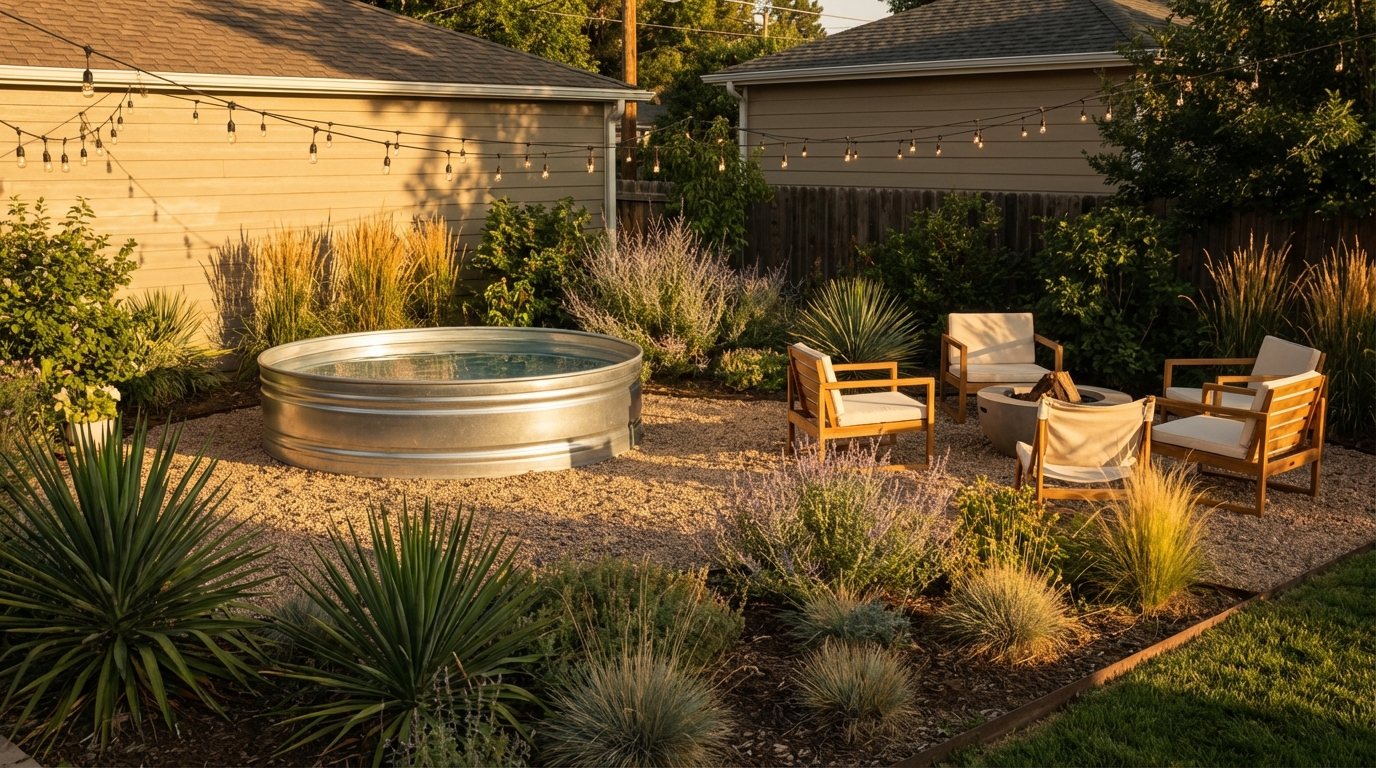
Stock tank pools repurpose galvanized agricultural tanks—the same ones used for watering livestock—and fit them with filtration and circulation systems. They've become popular for their industrial-chic aesthetic and remarkably fast installation. Many stock tank pool companies, including Splashkit here in Colorado, complete installations in a single day. The result is a functional, stylish pool without months of construction disruption.
Above-ground pools
Above-ground pools sit on top of a level surface and can be disassembled if you move or change your mind. They're the most budget-friendly option and work well for families wanting a pool without a permanent commitment. The tradeoff is aesthetics—above-ground pools typically look less polished than other options.
Plunge pools
Plunge pools are compact, deeper pools designed for cooling off rather than swimming laps. They fit well in smaller backyards and offer a modern, minimalist look. Installation time varies depending on whether you choose a prefabricated unit or a custom-built version.
How much does pool installation cost
Pool installation costs depend on several interconnected factors, and no single number applies to every project. Rather than focusing on averages that may not reflect your situation, it helps to understand what drives costs up or down.
- Pool type: Inground pools cost significantly more than stock tank or above-ground options due to excavation, materials, and labor.
- Size and depth: Larger pools require more materials and more hours of work.
- Site preparation: Rocky soil, slopes, or limited equipment access can increase costs substantially.
- Features and upgrades: Heating systems, LED lighting, decking, and water features all add to the total.
- Geographic location: Labor rates and permit fees vary by region,
sometimes dramatically.with costs running 15%-25% higher in northeastern states and urban areas.
Stock tank pools and above-ground options typically fall in the lower price range, while custom inground builds can reach six figures depending on complexity. The best way to understand costs for your specific project is to request detailed quotes from several contractors.
How long does pool installation take
Installation timelines vary dramatically based on pool type. Setting realistic expectations upfront prevents frustration and helps you plan around the project.
Traditional inground pool timeline
Inground swimming pools typically require two to four months from initial design to first swim. Permits, excavation, plumbing, electrical work, and curing time for concrete all contribute to the extended timeline. Weather delays can push projects even longer, particularly in regions with unpredictable conditions.
Stock tank and plunge pool timeline
Stock tank pools often go from delivery to swim-ready in a single day. Plunge pools vary more widely—prefabricated units install quickly, while custom-built versions may take several weeks. For homeowners wanting a backyard transformation without months of disruption, the one-day installation timeline offers obvious appeal.
Pool installation in high-altitude and desert climates
If you live in Colorado or a similar high-altitude region, climate conditions affect pool equipment and materials in ways that contractors from other areas may not anticipate. Intense UV exposure, dramatic temperature swings, and dry air all create challenges that generic installations often fail to address.
- UV degradation: Stronger sun at elevation breaks down plastics, liners, and seals faster than at sea level.
- Temperature fluctuations: Freezing nights followed by warm days stress pumps, filters, and plumbing connections.
- Water evaporation: Low humidity means pools lose water faster, requiring more frequent monitoring and refilling.
- Equipment calibration: Pumps and filtration systems may need adjustment to perform efficiently at altitude.
Splashkit engineers its equipment and processes specifically for these rugged Western conditions. That specialization matters because a pool system designed for Florida or California may struggle to perform reliably at 5,000 feet elevation with 300 days of intense sunshine.
Questions to ask before hiring a swimming pool contractor
Walking into a consultation prepared helps you evaluate contractors more effectively. Here are questions worth asking:
- How long have you been installing pools in this specific area?
- Are you licensed and insured in this state?
- Can you provide references from customers with similar projects?
- What exactly is included in your quote, and what might cost extra?
- What warranties do you offer on materials and labor?
- How do you handle permits and inspections?
- What is your realistic timeline for completion?
The answers matter, but so does how confidently and clearly they're delivered. A contractor who hedges on basic questions or seems annoyed by them may not be the right fit.
What to expect during the pool installation process
Understanding the general stages of installation helps you prepare your property and schedule. While specifics vary by pool type and contractor, most projects follow a similar sequence.
- Consultation and design: You'll discuss your vision, budget, and site conditions with the contractor to determine the best approach.
- Permits and approvals: Some pool types require building permits while others don't. Your contractor typically handles this process.
- Site preparation: The crew levels the ground, marks utilities, and ensures equipment can access your property.
- Installation: The actual pool construction or setup takes place, ranging from one day to several months depending on pool type.
- Final walkthrough: You'll inspect the finished pool, learn how equipment operates, and receive maintenance guidance.
For stock tank pool installations, the entire process from consultation to swimming often happens within a week or two, with the actual installation taking just one day.
Does a pool increase home value
Pools can add value to a home, though the return varies by market, climate, and pool type. In warm climates and vacation destinations, pools are often expected amenities that boost resale appeal. In cooler regions, the value added may not offset installation costs, and some buyers view pools as maintenance burdens.
For short-term rental properties, the calculation looks different. Pools frequently justify higher nightly rates and attract more bookings, making them worthwhile investments even if they don't dramatically increase the property's sale price.
Pool installation for rentals and commercial properties
Pools aren't just for personal enjoyment. Property managers and business owners increasingly recognize pools as revenue-generating amenities that attract guests and tenants.
Short-term rental properties
A pool can significantly increase booking rates and nightly prices for Airbnbs and vacation rentals. Fast installation options like stock tank pools minimize the time your property sits offline during the upgrade—important when every vacant night represents lost income.
Apartment communities and hotels
Pools serve as competitive amenities that help apartment communities attract tenants and hotels attract guests. Splashkit supports commercial clients with custom pool installations designed for higher-traffic use, including apartment communities, hotels, and boutique lodging properties across Colorado.
Find a top-rated pool installer for your property
Choosing the right pool contractor comes down to research, comparison, and asking the right questions. Look for verified reviews, proper licensing, transparent pricing, and experience with your specific pool type and climate conditions. The best pool companies make the process feel straightforward rather than stressful.
For Colorado homeowners and property managers seeking a fast, stylish pool solution built for high-altitude conditions, request a custom installation quote from Splashkit.
FAQs about pool installation
What is the cheapest type of pool to install?
Stock tank pools and above-ground pools are generally the most affordable options because they require less labor, materials, and site preparation than inground swimming pools. Stock tank pools also offer a more polished aesthetic than traditional above-ground options at a similar price point.
Can a pool be installed in a small backyard?
Yes, stock tank pools and plunge pools are specifically designed for compact spaces. Many fit comfortably in urban backyards, patios, or side yards without requiring major excavation or extensive square footage.
How should a yard be prepared for pool installation?
Clear the installation area of debris, furniture, and plants. Ensure the ground is reasonably level and confirm that delivery vehicles can access your property. Your pool installer will provide specific requirements based on your chosen pool type and site conditions.
What time of year is best to schedule pool installation?
Spring and early summer are the most popular seasons for pool installation, which means longer wait times with contractors. Scheduling during fall or winter often means shorter lead times and potentially better availability from top-rated installers.
Do pools require a fence or safety barrier?
Most local building codes require fencing or barriers around pools for safety, though specific requirements vary by municipality. Your pool contractor can advise on local regulations, and your building department can confirm exact requirements for your property.