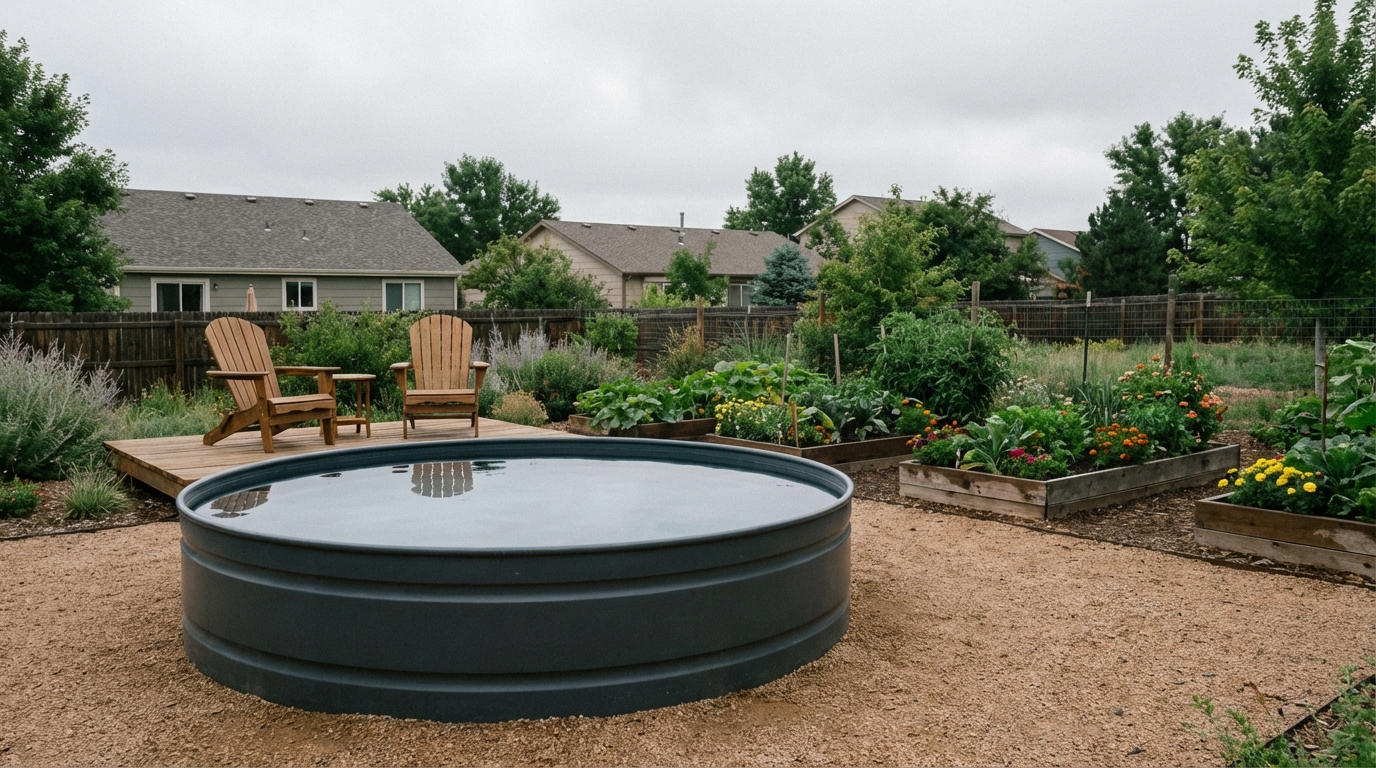
Stock Tank Pool Sizes: Complete Guide to Dimensions and Options
Stock tank pools range from compact 3-foot soaking tubs to sprawling 10-foot swimming pools, with most backyard installations falling somewhere in the 6-foot to 10-foot range. The size you choose affects everything from how many people can cool off together to how much you'll spend on water and maintenance.
This guide covers the full spectrum of stock tank pool dimensions, depths, and shapes to help you find the right fit for your space and budget.
What is a stock tank pool
Stock tanks typically range between three and ten feet in diameter, with depths of two to three feet. Originally designed to water livestock on farms and ranches, these galvanized metal containers have become a popular backyard pool alternative because of their durability, affordability, and simple design., part of the growing $529.6 million above-ground pool market seeking cost-effective swimming solutions.
The concept is straightforward: take a sturdy agricultural tank, add filtration, fill it with water, and you've got a functional swimming pool. Unlike in-ground pools that require weeks or months of construction, a stock tank pool can be installed in a single day. For homeowners who want a quick backyard upgrade without the hassle of permits and excavation, stock tanks offer an appealing middle ground.
Stock tank pool sizes and dimensions
When it comes to stock tank pool dimensions, you'll find options ranging from compact soaking tubs to larger swimming pools. The size you choose affects everything from how many people can use it comfortably to how much you'll spend on water and chemicals.
Round stock tank pool sizes
Round stock tanks are the most common shape, and they come in diameters from 3 feet up to 10 feet. The 6-foot, 8-foot, and 10-foot sizes are the most popular for backyard pools.
A 6-foot tank works well for one or two people who want a quick cool-down spot. Move up to an 8-foot tank, and you can comfortably fit four to five adults sitting around the edges. The 10-foot round tank is the largest standard option, accommodating six to eight people—though "comfortably" depends on how friendly everyone is feeling.
Here's something worth knowing: many people who start with a smaller tank end up wishing they'd gone bigger. If you're on the fence between two sizes, the larger option usually proves to be the better choice.
Oval stock tank pool dimensions
Oval stock tanks provide more length while fitting into narrower spaces. Typical dimensions range from about 4 feet wide by 6 feet long up to 4 feet by 8 feet.
The elongated shape lets you stretch out rather than sitting upright, which makes lounging more comfortable. Oval tanks also work well along fence lines or in side yards where a round tank might feel awkward. On the other hand, finding oval tanks at local farm supply stores can be tricky—you'll likely have to order from a specialty retailer.
Rectangular and galvanized trough pool sizes
Rectangular galvanized trough pools offer a more modern look and maximize swimming length in compact footprints. Sizes range from small 2-foot by 4-foot soaking tubs up to larger configurations around 8 feet by 20 feet from specialty manufacturers.
The rectangular shape appeals to homeowners who want something sleeker than the traditional farmhouse aesthetic. Some companies now produce rectangle stock tanks specifically designed for pool use, with reinforced construction and integrated filtration ports.
Gallon capacity by size
Gallon capacity determines how much filtration power you'll need and how much you'll spend on chemicals and water. Larger pools require more robust equipment to keep the water clean.
Here's how capacity typically breaks down by size:
- 6-foot round tank: 400 to 500 gallons
- 8-foot round tank: 700 to 900 gallons
- 10-foot round tank: 1,100 to 1,300 gallons
- Oval tanks: 500 to 1,000 gallons, depending on dimensions
A 10-foot tank holds roughly twice the water of a 6-foot tank, which means double the fill time, double the chemicals, and a more powerful pump to circulate everything properly.
How deep is a stock tank pool
Depth is one of the first questions people ask about stock tank pools. Standard agricultural tanks typically come in 2-foot depths, though deeper options exist for those who want more submersion.
Shallow stock tanks for wading
Most off-the-shelf stock tanks are about 2 feet deep. At this depth, adults can sit comfortably with water reaching chest level, and kids can splash around safely without the water going over their heads.
Shallow tanks are also the easiest to install since they weigh less when filled and don't require as much structural support underneath. For hot Colorado summers, even a 2-foot pool provides plenty of relief from the heat.
3-foot deep stock tanks
Three-foot deep stock tanks allow for more comfortable seated soaking. At this depth, you can sit on the bottom with water covering your shoulders, creating more of a true soaking experience rather than just cooling off.
Finding 3-foot tanks at standard farm supply stores is less common—you'll typically have to order from specialty pool retailers. The extra foot of depth also adds significant water weight, so proper ground preparation becomes more important.
4-foot deep stock tank options
Four-foot deep stock tanks provide genuine plunge pool functionality. Adults can stand with water at chest level, which opens up possibilities for light exercise and more active use.
| Depth | Best For | Installation Notes |
|---|---|---|
| 2 feet | Wading, cooling off, kids | DIY-friendly, minimal prep |
| 3 feet | Seated soaking, lounging | Requires level ground, moderate prep |
| 4 feet | Plunge pool, standing submersion | Often requires professional installation |
Tanks deeper than 3 feet usually require custom or bottomless solutions since standard agricultural tanks rarely exceed that depth.
Round vs oval stock tank pools
Both shapes work well, and the right choice depends on your space and how you plan to use the pool.
- Space efficiency: Round tanks fit naturally in square or open areas. Oval tanks work better in narrow spaces like side yards or along fence lines.
- User capacity: Round tanks let people sit facing each other, which is great for conversation. Oval tanks allow for stretching out but can feel cramped with multiple users.
- Aesthetic appeal: Round tanks have a classic farmhouse look. Oval tanks offer a slightly more refined appearance.
- Availability: Round tanks are easy to find at farm supply stores. Oval options typically require ordering from specialty retailers.
How to choose the right stock tank pool size
Picking the right size involves balancing your intended use, the number of regular users, and practical considerations about your property.
Matching size to intended use
Think about how you'll actually use your pool on a typical day. If you want a quick cool-down spot after yard work or gardening, a 6-foot tank might be perfect. For entertaining guests or family swim time, an 8-foot or 10-foot option makes more sense.
A couple looking for a relaxing evening soak has different requirements than a family with kids who want room to splash. Being honest about your primary use case helps avoid buyer's remorse later.
Number of users and capacity
A useful guideline: plan for about 2 feet of diameter per person for comfortable lounging. A 6-foot tank fits two to four people, an 8-foot tank fits four to six, and a 10-foot tank handles six to eight.
Keep in mind that these numbers assume everyone is sitting around the edges. If you want room to move around or float, consider sizing up from these estimates.
Backyard space and placement considerations
Beyond the tank's footprint, you'll want clearance space around the pool for safe entry and exit—typically 2 to 3 feet on all sides.
Other placement factors to consider:
- Level ground or the ability to level the installation area
- Access for delivery (can a truck or trailer reach your backyard?)
- Proximity to a water source for filling
- Distance from electrical outlets if you're adding filtration
- Sun exposure and shade patterns throughout the day
In Colorado, afternoon shade can make a big difference in water temperature and overall comfort during peak summer months.
Large stock tank pool options
For those who want more swimming space than standard tanks provide, several options exist beyond the typical 10-foot maximum.
Bottomless stock tanks
Bottomless tanks consist of just the sidewalls, which can be installed in-ground or paired with custom bottoms. This approach allows for much larger diameters—some manufacturers offer bottomless tanks up to 33 feet across with depths reaching 45 inches.
The trade-off is complexity. Bottomless tanks require significant site preparation, proper drainage planning, and typically professional installation. They're a different project entirely from dropping a standard tank in your backyard.
Custom and oversized galvanized trough pools
Specialty manufacturers now produce galvanized pools specifically designed for swimming rather than livestock. These purpose-built options often start at 12 feet in diameter and can extend beyond 20 feet.
Custom trough pools may include features like built-in benches, integrated filtration ports, and reinforced construction designed for the demands of pool use rather than agricultural applications.
Professional stock tank pool installations
Larger stock tank pools benefit from professional installation services that handle site preparation, filtration integration, and proper leveling. For Colorado homeowners, working with installers who understand high-altitude and desert climate conditions helps ensure the pool performs reliably through intense UV exposure and temperature swings.
Companies like Splashkit offer turnkey solutions that manage everything from initial consultation through your first swim, which takes the guesswork out of larger or more complex installations.
Stock tank pool costs by size
Size directly impacts both upfront and ongoing costs. While specific prices vary by region and retailer, understanding the cost factors helps with budgeting., especially when traditional pools average $65,909 to install.
- Tank cost: Larger diameters and deeper tanks cost more. A 10-foot tank typically costs significantly more than a 6-foot option.
- Filtration equipment: Bigger pools require more powerful pumps and larger filters to maintain water clarity.
- Water and chemicals: A 10-foot tank holds roughly twice the water of a 6-foot tank, which doubles fill costs and chemical expenses.
- Installation complexity: Larger, heavier tanks may require equipment for delivery and placement, adding to overall costs.
Why compact stock tank pools work for Colorado backyards
Colorado's climate and typical lot sizes make thoughtfully sized stock tank pools a natural fit. The intense high-altitude sun heats smaller pools quickly during the day, while cooler evening temperatures keep compact pools comfortable without excessive heating costs.
Most Colorado properties don't have the sprawling backyards common in other parts of the country. A well-designed 8-foot or 10-foot stock tank pool can transform a modest outdoor space into a genuine backyard retreat while still leaving room for outdoor dining, gardening, and other activities.
At Splashkit, we've found that Colorado homeowners consistently prefer pools that balance swimming space with practical yard use. The goal isn't necessarily the biggest pool possible—it's the right pool for your specific space and lifestyle.
Ready to find the right stock tank pool size for your property? Request a custom installation quote from Splashkit.
FAQs about stock tank pool sizes
What size stock tank pool is best for adults?
Most adults prefer tanks with at least a 6-foot diameter and 2-foot depth for comfortable seated soaking. An 8-foot tank offers more room for stretching out, and many adults who entertain regularly find the 10-foot option worth the extra investment for the added space.
Can you install a stock tank pool on a deck?
Yes, though the deck's structure has to support the combined weight of the tank, water, and occupants. A filled 8-foot stock tank can weigh over 7,000 pounds. Consulting a contractor before placement helps avoid structural problems.
Do stock tank pools require permits in Colorado?
Permit requirements vary by municipality and typically depend on pool size, depth, and whether electrical work is involved. Some Colorado cities require permits for pools over a certain gallon capacity. Checking with your local building department before installation clarifies what's required in your area.
How many people can fit in a standard stock tank pool?
Capacity depends on tank size and how you're using it. For comfortable lounging with everyone seated around the edges, expect two to four people in a 6-foot tank, four to six in an 8-foot tank, and six to eight in a 10-foot tank.
How long do galvanized stock tank pools last?
With proper maintenance and rust prevention, a galvanized stock tank pool can last five to ten years or longer. Lifespan varies based on water treatment practices, climate exposure, and whether you use a protective liner. Colorado's dry climate can actually extend tank life compared to more humid regions.