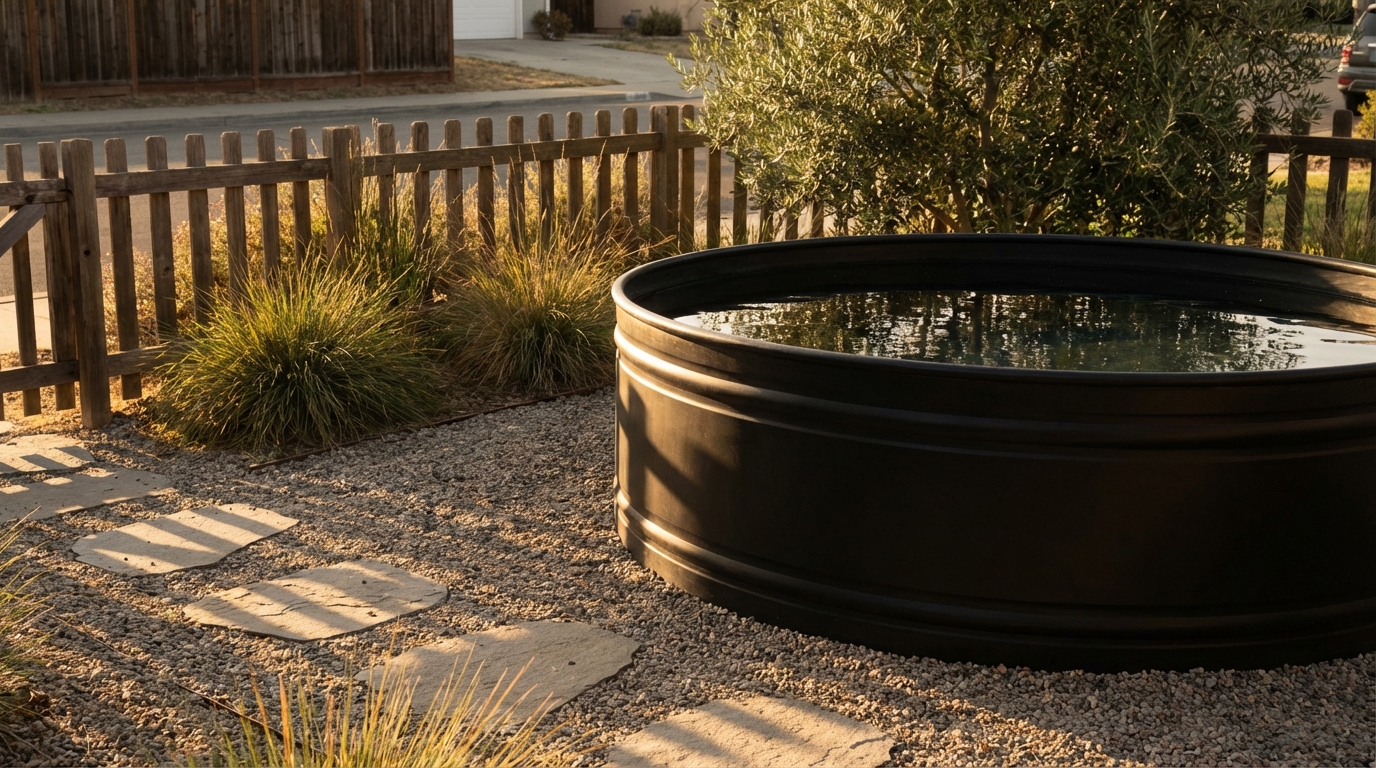
Stock Tank Pool vs Inflatable Pool Cost Breakdown and Buying Guide
A stock tank pool costs $500 to $3,500 depending on whether you DIY or hire a pro, while an inflatable runs $100 to $600 upfront. But upfront price only tells part of the story—durability, maintenance, and replacement costs shift the math considerably over time.
This guide breaks down the true cost of each pool type, compares their long-term value, and helps you figure out which one actually makes sense for your backyard and budget in a market that's expanding to $966.2 million by 2034.
How much do stock tank pools cost
A stock tank pool is a repurposed livestock watering trough—typically made from galvanized steel or polyethylene—that's been converted into a backyard swimming pool. The tank itself runs between $200 and $800 depending on size and material, while a complete DIY setup with pump, filter, and fittings typically costs $400 to $1,200. Professional installation with all equipment included ranges from $1,800 to $3,500.
Why such a wide range? Three factors drive the price: tank material, diameter, and whether you're setting it up yourself or hiring someone to handle the work.
Metal stock tank pool prices by size
Galvanized steel tanks are the original stock tank pool—the ones you've probably seen all over social media. They're sturdy, weather-resistant, and develop a nice patina as they age.
For the tank alone, here's what you're looking at:
6-foot round: $250–$350
8-foot round: $350–$500
10-foot round: $500–$700
Oval tanks (2x4 to 2x8 feet): $300–$600
These prices don't include the pump, filter, or fittings you'll add to keep the water clean. Budget another $150–$400 for that equipment.
Poly stock tank pool prices by size
Polyethylene tanks offer a few advantages for pool use. They won't rust, they handle UV exposure better than metal, and they don't get as hot to the touch in direct sun. The tradeoff is a slightly higher price—usually 10–20% more than galvanized steel.
6-foot round: $300–$400
8-foot round: $400–$550
10-foot round: $550–$800
For areas with intense sun exposure, poly tanks often make sense because they require less maintenance over time.
Professional installation costs
Hiring a pro adds labor costs but removes the learning curve entirely. A turnkey installation typically covers delivery, site preparation, tank placement, pump and filter setup, and initial water treatment.
Labor and setup generally run $1,500 to $2,500 on top of equipment costs. All in—tank, pump, filter, fittings, and professional installation—you're looking at $1,800 to $3,500 depending on your location and the features you choose.
How much do inflatable pools cost
Inflatable pools use air-filled walls made from PVC or vinyl. They're the cheapest way to get a pool in your backyard, though quality and durability vary dramatically across the price range.
Budget inflatable pool prices
Ring-top inflatables are the most basic option. Only the top ring inflates—the walls rise on their own as you fill the pool with water.
8-foot ring-top: $30–$80
10-foot ring-top: $50–$120
12-foot ring-top: $80–$150
These work fine for a season or two of light use. However, they puncture easily and rarely include any filtration system.
Mid-range inflatable pools with frames
Metal-frame pools sit a step above pure inflatables. They use soft-sided walls supported by a steel frame, which allows for larger sizes and deeper water.
10-foot frame pool: $150–$300
12-foot frame pool: $200–$400
15-foot frame pool: $300–$600
Many mid-range options include a basic pump and filter, making them more practical if you plan to use the pool for more than a few weeks.
Pump and filter equipment costs
Budget inflatables often skip filtration entirely, which means you'll either buy equipment separately or change the water every few days. A basic filter pump runs $30–$80, while more capable cartridge filter systems cost $80–$150.
Without filtration, water turns green surprisingly fast—sometimes within 48 hours in warm weather.
Stock tank pool vs inflatable pool cost comparison
Upfront price is only one piece of the puzzle. What really matters is total cost over the life of the pool.
Cost Factor | Stock Tank Pool | Inflatable Pool |
|---|---|---|
Upfront cost (with equipment) | $500–$1,200 DIY / $1,800–$3,500 installed | $100–$600 |
Expected lifespan | 10–20+ years | 1–3 years |
Annual maintenance | $100–$200 | $100–$200 |
Replacement frequency | Rarely | Every 1–3 seasons |
5-year total cost | $1,000–$2,200 | $500–$2,000+ |
Upfront cost breakdown
On day one, inflatables cost less—there's no way around it. A functional inflatable setup can run under $200, while even a basic DIY stock tank starts around $500.
That said, stock tank pricing includes equipment built to last for years. Many inflatable purchases end up being repeated each season.
Five-year total cost of ownership
Here's where the comparison gets interesting. If you replace a $150 inflatable every two years and factor in pumps and accessories, you're spending $400–$600 over five years just on replacements.
A stock tank, meanwhile, rarely requires replacement parts during that same period. The tank itself lasts a decade or more with basic care, and quality pumps typically run three to five years before wearing out.
Ongoing maintenance costs for each pool type
Both pool types require regular upkeep, with maintenance averaging $80 to $150 monthly. The good news is that chemical and filtration costs are similar for pools holding comparable amounts of water.
Water treatment and chemical expenses
Regardless of which pool you choose, you'll use chlorine or an alternative sanitizer, pH balancers, and occasional algaecide. For a typical backyard pool, expect $50–$100 per season on chemicals.
The difference isn't the chemicals—it's how well each pool type maintains water quality between treatments.
Filter and pump replacement costs
Stock tank pumps designed for continuous outdoor use typically last three to five years with proper winterization. Replacements run $80–$200.
Inflatable pool pumps tend to be lower quality and often wear out every one to two seasons. They're cheaper individually at $30–$80, but the costs accumulate.
Repair and patching costs
Inflatables are vulnerable to punctures from pets, yard debris, or simple wear. Patch kits cost just a few dollars, though many punctures—especially along seams—can't be permanently fixed.
Metal stock tanks can develop rust spots over time, particularly at the waterline. A wire brush and rust-resistant paint ($15–$30) handle most issues, and these repairs hold up for years.
How long each pool type lasts
Durability is the biggest difference between stock tanks and inflatables, and it directly affects your long-term costs.
Metal stock tank pool lifespan
A well-maintained galvanized steel tank can last 15–20 years or longer. The keys to longevity are proper drainage during winter, occasional rust treatment, and balanced water chemistry to prevent corrosion.
In dry climates, rust develops more slowly than in humid regions—a nice advantage if you live somewhere like Colorado.
Inflatable pool lifespan
Most inflatables last one to three seasons with regular use. UV exposure breaks down PVC and vinyl, seams weaken, and valves fail. Even with careful handling, replacement every few years is typical.
Higher-quality frame pools can stretch to three to five seasons, but they still can't match the longevity of steel or poly tanks.
Setup and installation cost factors
Before you can swim, you'll prepare your site. This step affects both total cost and how well your pool performs over time.
Surface preparation and leveling
Both pool types require level ground. An uneven surface stresses the walls and can cause structural failure. For inflatables, a tarp over flat grass often works fine.
Stock tanks benefit from a more prepared base because of their weight and permanence:
Sand base: $50–$100 for materials
Gravel pad: $75–$150 for materials
Paver or concrete pad: $200–$500+
DIY setup vs professional installation
Inflatables are designed for DIY—most people can set one up in under an hour. Stock tanks require more effort: drilling holes for fittings, installing the pump and filter, and ensuring proper drainage—though comprehensive DIY kits can simplify this process.
Professional installation makes the most sense for stock tanks. A filled 8-foot tank weighs over 2,500 pounds, and the plumbing connections benefit from experienced hands.
Pool accessories and add-on costs
The base pool is just the starting point. Accessories enhance your experience and add to your total investment.
Heaters and temperature control
A pool heater extends your swim season, especially in cooler climates. Stock tanks retain heat better than inflatables because of their denser materials, so they require less energy to stay warm.
Solar heaters: $100–$300
Electric heaters: $150–$400
Propane heaters: $200–$500
Covers and winterization supplies
A quality cover keeps debris out and helps retain heat. Fitted stock tank covers run $50–$150, while inflatable pool covers cost $20–$50 but often don't fit as securely.
Winterization supplies—antifreeze for plumbing and protective covers—add $30–$75 to your annual costs in cold climates.
Steps, benches, and decking options
Stock tanks offer more customization because of their structural stability. You can build surrounding decks, add interior benches, or install permanent steps. These upgrades range from $100 for basic steps to $1,000+ for custom decking.
Inflatables don't support the same level of customization, though basic pool ladders ($30–$80) work fine for getting in and out.
How to choose the right pool for your backyard
The right choice depends on how you'll use the pool, how long you want it to last, and what fits your budget.
Best uses for stock tank pools
Stock tanks work best as permanent backyard features:
Long-term homeowners who want a durable pool that lasts for years
Rental property owners looking for a guest amenity that handles heavy use
Design-focused spaces where the pool becomes part of the landscape
Best uses for inflatable pools
Inflatables make sense for temporary or seasonal situations:
Renters who can't make permanent changes to their property
Families with young children who want shallow, low-risk water play
Budget-conscious buyers testing whether a backyard pool fits their lifestyle
Key questions to ask before buying
Before deciding, consider: How many seasons will you realistically use this pool? Do you want a permanent feature or something you'll store each winter? What's your total budget including accessories and maintenance? Is your ground level, or will you need site preparation?
Why Colorado homeowners prefer stock tank pools
Colorado's high altitude and intense UV create unique challenges for backyard pools. Inflatables degrade faster here than in milder climates, while stock tanks—especially poly versions—handle the conditions well.
The dry climate also means less rust on metal tanks, extending their already long lifespan. And for homeowners who want to swim from late spring through early fall, stock tanks pair well with heaters to stretch the season.
For Colorado homeowners ready to skip the DIY process, Splashkit offers professional one-day stock tank pool installations with everything included—delivery, setup, pump and filter, and ongoing support.
Request a custom installation quote to see what a turnkey stock tank pool would cost for your backyard.
Frequently asked questions about stock tank and inflatable pool costs
Do you need a permit for a stock tank pool?
Most jurisdictions don't require permits for above-ground pools under a certain size or depth—typically under 24 inches deep or holding less than 5,000 gallons. Requirements vary by county and city, so checking with your local building department before installation is wise.
How much does it cost to fill a stock tank pool with water?
Water costs depend on local utility rates and tank size. A standard 8-foot stock tank holds about 700 gallons, which typically adds $5–$15 to your water bill. Larger tanks and more frequent water changes increase this cost.
Can you leave a stock tank pool outside year-round?
Metal and poly stock tanks can stay outdoors year-round with proper winterization—draining below the fittings, storing the pump indoors, and covering the tank. Inflatables, on the other hand, should be fully drained and stored inside to prevent freeze damage.
Are stock tank pools safe for children?
Stock tank pools can be safe for children with appropriate supervision and safety measures like lockable covers and fencing around the pool area. The same precautions apply to any backyard water feature.
What is the best way to winterize a stock tank pool in cold climates?
Drain the pool below the fitting level, disconnect and store the pump indoors, and add a winter cover. Some owners add antifreeze to any remaining water in the plumbing lines. In spring, reconnect the pump, refill, and balance the water chemistry.