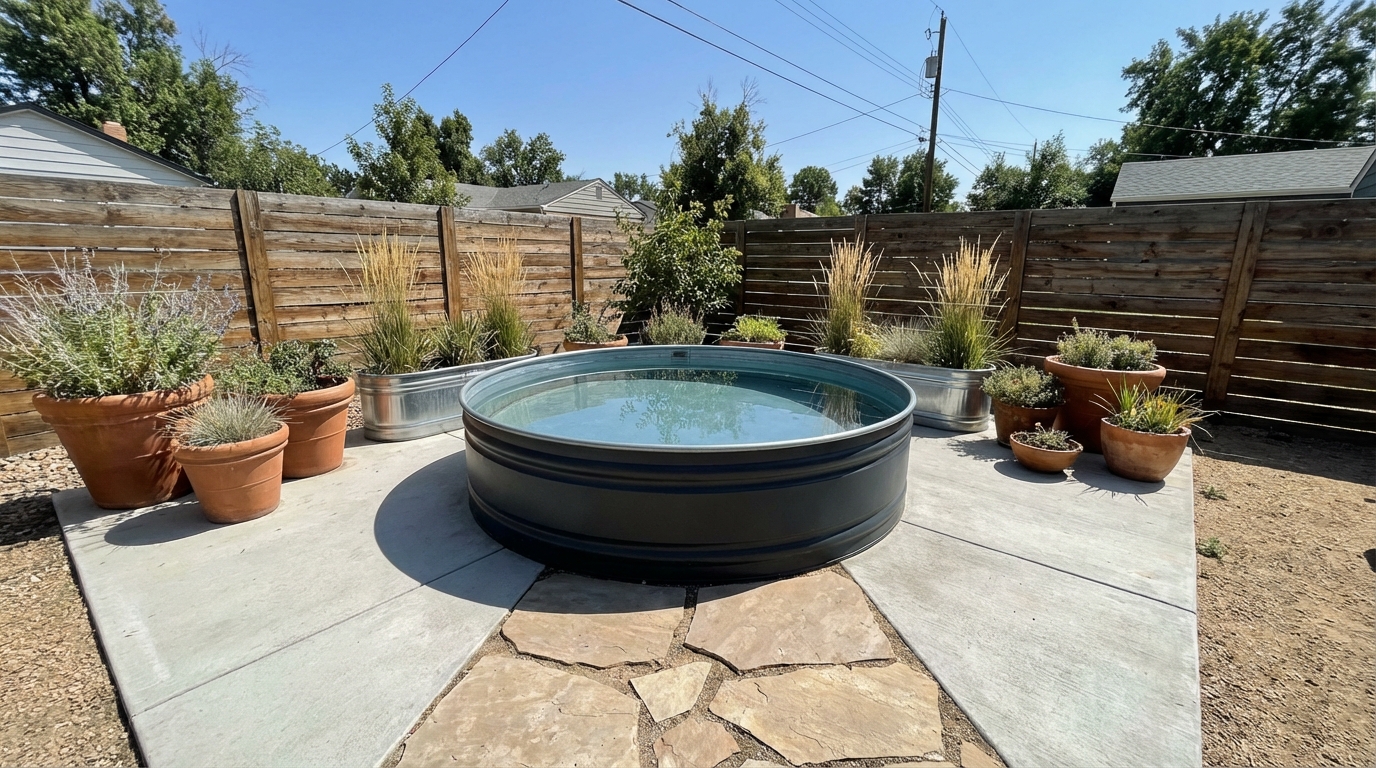
Budget Pool Options: 12 Affordable Ways to Add a Pool to Your Backyard
A backyard pool doesn't have to cost $50,000 or take six months to build. Stock tank pools, above-ground options, and plunge pools offer the same refreshing escape at a fraction of the price and timeline.
This guide covers 12 budget-friendly pool types, what each one costs, and how to choose the right option for your space and climate.
What makes a pool budget-friendly
The most affordable pool types share a few common traits: lower upfront costs, simpler installation, minimal permitting requirements, and reduced ongoing maintenance. Above-ground pools, stock tank pools, and inflatable pools typically check all of these boxes, with prices ranging from a few hundred dollars to several thousand. By comparison, traditional in-ground pools often start around $35,000 and can climb well past $65,000., with labor alone making up 25% to 50% of the total cost.
But affordability involves more than just the pool itself. Site preparation, filtration equipment, decking, and labor all factor into the final number. A stock tank might cost $500 on its own, yet a complete setup with proper filtration and a surrounding deck could run $2,000 to $5,000.
Climate plays a role too. In Colorado's high-altitude environment, intense UV exposure and wide temperature swings affect certain materials more than others. Choosing a pool type suited to local conditions helps avoid costly repairs or early replacements.
Budget pool costs by type
Understanding relative costs makes it easier to narrow down which pool type fits your situation. Here's a general comparison:
| Pool Type | Typical Cost Range | Installation Complexity | Best For |
|---|---|---|---|
| Inflatable pool | $100–$1,000 | Minimal | Temporary or seasonal use |
| Stock tank pool | $500–$5,000 | Simple | Small yards, quick setup |
| Above-ground pool | $1,500–$15,000 | Moderate | Families, larger swim area |
| Plunge pool | $10,000–$25,000 | Professional recommended | Compact luxury |
| Semi-in-ground pool | $8,000–$25,000 | Professional required | Permanent aesthetic appeal |
Stock tank pool costs
Stock tanks run between $200 and $800 depending on size. Add filtration, a pump, and basic accessories, and a complete DIY setup typically lands between $1,500 and $3,500. Professional installation with turnkey service generally ranges from $3,000 to $5,000, which includes delivery, setup, and water treatment calibrated for your area.
Above-ground pool costs
Above-ground pools vary widely based on size, materials, and features. Basic frame pools start around $1,500, while larger steel-wall models with decking can reach $15,000 or more. Most families find a solid mid-range option between $3,000 and $7,000.
Plunge pool costs
Plunge pools sit between budget options and traditional in-ground pools. Prefabricated fiberglass or concrete models typically cost $10,000 to $25,000 installed. That's significantly less than a full-size in-ground pool, though more than simpler alternatives like stock tanks.
Inflatable and kit pool costs
Inflatable pools offer the lowest entry point, with decent options available for $200 to $1,000. They won't last as long as permanent installations, but they're a practical way to test whether a backyard pool fits your lifestyle before committing to something more substantial.
Stock tank pools
Stock tank pools are galvanized metal containers originally designed for watering livestock. Over the past several years, they've become one of the most popular affordable pool options for homeowners who want a stylish, functional pool without months of construction.
Why stock tanks are a top affordable choice
Several factors make stock tanks appealing for backyard pools:
- Low purchase price: The tank itself costs a fraction of other pool structures
- Minimal site preparation: No excavation or complex groundwork required
- Quick setup: A complete installation can be ready for swimming in a single day
- Compact footprint: Ideal for smaller yards, patios, and urban spaces
The aesthetic works well too. Stock tanks have a clean, modern look that pairs nicely with wood decking, landscaping, and outdoor furniture.
Stock tank sizes and configurations
Round stock tanks typically range from 6 to 10 feet in diameter, while oval options offer more length for lounging. The most popular sizes for backyard pools are 8-foot round tanks, which hold about 700 gallons, and 8-foot by 2-foot oval tanks. Even the largest stock tanks fit comfortably in modest backyards.
Professional installation vs DIY setup
You can certainly purchase a stock tank and add a pump yourself. Many homeowners take this route and end up with a perfectly functional pool. However, professional installation ensures proper filtration, drainage, and water treatment—details that matter more in high-altitude climates where intense UV exposure and mineral-heavy water can cause issues.
Turnkey services handle everything from delivery to setup, often completing the entire project in a single day. For homeowners who want to skip the learning curve, this approach offers peace of mind and a pool that's ready to use immediately.
Plunge pools
Plunge pools are small, deep pools designed primarily for cooling off rather than lap swimming. They offer a more polished appearance than stock tanks while remaining far more affordable than full-size in-ground pools. Think of them as a compact luxury option., part of a market valued at $440.24 million in 2024 and growing rapidly.
Precast concrete plunge pools
Precast plunge pools are manufactured off-site and delivered ready to install. Because the concrete work happens at a factory rather than your backyard, labor costs drop significantly compared to poured-in-place concrete pools. Installation typically takes a few days rather than several weeks.
Fiberglass drop-in plunge pools
Fiberglass shells arrive as a single piece, ready to be set into a prepared hole. They feature smooth finishes, quick installation timelines, and excellent durability. Most fiberglass plunge pools can be installed and filled within a week.
Above-ground pools
Above-ground pools remain the traditional budget pool choice for families. They come in various materials and sizes, offering flexibility for different yards and budgets.
Traditional frame pools
Metal or plastic frame pools with liner walls are affordable and easy to set up seasonally. Many families store them during winter months and reinstall them each summer. Prices typically range from $1,500 to $5,000, and setup takes a weekend for most DIYers.
Steel wall pools
Steel wall pools offer more durability and a permanent installation option. They're sturdier than frame pools and can last 15 to 20 years with proper maintenance. The trade-off is higher upfront cost and more involved installation.
Resin and hybrid models
Resin pools resist corrosion better than steel, making them suitable for humid climates or areas with harsh water conditions. Hybrid models combine steel walls with resin components, balancing strength and longevity.
Cocktail pools
Cocktail pools—sometimes called spools—are compact pools designed for lounging and socializing rather than swimming laps. Their smaller footprint reduces costs for materials, installation, and ongoing maintenance. Think of them as a middle ground between a hot tub and a traditional pool, offering enough space to cool off without the expense of a full-size installation.
Semi-in-ground pool options
Semi-in-ground pools are partially buried, offering a more integrated look than fully above-ground options while costing less than full in-ground installation. They work particularly well on sloped properties where a fully above-ground pool would look awkward.
Partially buried stock tanks
Stock tanks can be set into the ground or surrounded by raised decking for a built-in appearance. This approach delivers a polished aesthetic at a fraction of the cost of traditional in-ground construction. It's a popular upgrade for homeowners who want their pool to feel like a permanent landscape feature rather than a temporary addition.
Semi-inground above-ground pools
Certain above-ground pool models are rated for partial burial. This allows for customized installations that blend with your yard's terrain while keeping costs manageable. Not all above-ground pools can be buried, so checking manufacturer specifications matters.
Inflatable pools
Inflatable pools are the most accessible entry point for budget-conscious buyers. They range from basic kiddie pools to heavy-duty options that accommodate adults comfortably.
Heavy-duty inflatable pools
Larger inflatable pools with reinforced materials can accommodate adults and last multiple seasons with proper care. Look for options with sturdy frames and thicker vinyl walls. While they won't match the durability of metal or fiberglass pools, they offer a low-risk way to enjoy a backyard pool.
Quick-set ring top pools
Quick-set pools use an inflatable ring at the top and rise as they fill with water. Setup takes minutes, and they're easy to drain and store at the end of the season. They're a practical choice for renters or homeowners who aren't ready to commit to a permanent installation.
Shipping container pools
Shipping container pools are repurposed steel containers converted into ready-to-install pools. They offer an industrial aesthetic and arrive fully assembled, which simplifies installation considerably. Costs typically range from $15,000 to $35,000 depending on size and features—more expensive than stock tanks or above-ground pools, but still less than traditional in-ground construction.
Natural swimming pools
Natural swimming pools use plants and biological filtration to keep water clean instead of chemicals. A regeneration zone filled with aquatic plants filters the water naturally, eliminating the need for chlorine or other treatments.
While initial construction costs can be moderate to high, ongoing maintenance costs are lower since you're not purchasing chemicals regularly. Natural pools appeal to homeowners who prefer an eco-friendly approach and don't mind a more organic aesthetic.
How to make budget pools look high-end
A well-designed setting transforms any affordable pool into a backyard centerpiece. The pool itself is just one element—the surrounding space often matters more for overall appearance.
Build a surrounding deck or platform
Wood or composite decking around a pool creates a cohesive, polished look. It also provides space for lounging, entertaining, and storing towels and accessories. Even a simple platform elevates a stock tank from utilitarian to intentional.
Add landscaping and privacy features
Plants, privacy screens, or fencing frame the pool area and create a more intimate atmosphere. Native plants work well in Colorado and require less water than traditional landscaping. Strategic placement of greenery can also hide equipment and create visual interest.
Upgrade filtration and water features
Better filtration keeps water clearer and reduces maintenance time. Small features like fountains or spillovers add visual interest and pleasant ambient sound. These upgrades typically cost a few hundred dollars but make a noticeable difference in the overall experience.
Choose quality accessories and lighting
Outdoor lighting extends your pool's usability into the evening and adds ambiance. Stylish poolside furniture and thoughtful accessories—quality towels, a good speaker, comfortable seating—complete the transformation without major expense.
How to choose the right affordable pool for your backyard
Selecting the right pool involves balancing several practical considerations. What works perfectly for one yard might be completely wrong for another.
Evaluate your available space
Measure your yard and consider placement factors like sun exposure, access for installation, and proximity to structures. Stock tanks and plunge pools work well in compact spaces, while above-ground pools typically require more room. Also consider how the pool will look from inside your home and from neighboring properties.
Set a realistic budget range
Account for not just the pool but also installation, accessories, decking, and ongoing maintenance. A $500 stock tank can easily become a $3,000 project once you add filtration, a deck, and landscaping. Building in a buffer for unexpected costs helps avoid surprises. costs of approximately $960 to $1,800 yearly.
Consider your climate and swimming season
Colorado's high altitude and intense sun require durable materials and proper water treatment. Pools that perform well at sea level may struggle with UV degradation or mineral buildup at elevation. Working with installers familiar with local conditions helps ensure your pool lasts.
Decide between DIY and professional installation
DIY installation offers lower upfront costs but requires research, tools, and time. Professional installation costs more initially but ensures proper setup, filtration, and ongoing support.
For stock tank pools in Colorado, turnkey services can complete the entire project in a single day—from delivery to your first swim.
Ready to transform your backyard? Request a custom installation quote from Splashkit and enjoy your new pool by this weekend.
FAQs about affordable pool options
What is the most affordable type of pool to install?
Stock tank pools and inflatable pools are typically the most affordable options. Stock tanks offer better durability and a more attractive appearance for a modest additional investment over basic inflatables. For a complete, swim-ready setup, expect to spend $1,500 to $5,000 on a stock tank pool.
How long do budget-friendly pools typically last?
Lifespan varies considerably by type. Inflatable pools may last two to five seasons with careful use, while well-maintained stock tank and above-ground pools can last 10 to 20 years. Proper water treatment and winterization extend the life of any pool.
Do I need a permit for a stock tank or above-ground pool?
Permit requirements vary by municipality and often depend on pool size, depth, and whether the installation is permanent. Some areas require permits for any pool over a certain depth or capacity. Checking with your local building department before starting your project avoids potential issues.
Can affordable pools be heated for year-round use?
Many budget pools can be heated using external heaters or heat pumps. Adding heat extends the swimming season significantly in cooler climates, though heating costs vary based on pool size and local energy prices. Some homeowners in Colorado use their heated stock tank pools from April through October.
Will adding a budget pool increase my home value?
A well-designed pool area can enhance curb appeal and buyer interest, particularly for short-term rental properties. The return on investment varies by market and installation quality. In Colorado's competitive real estate market, attractive outdoor spaces generally appeal to buyers, though pools rarely return their full cost at resale., with the National Association of Realtors reporting an average 56% ROI for inground installations.