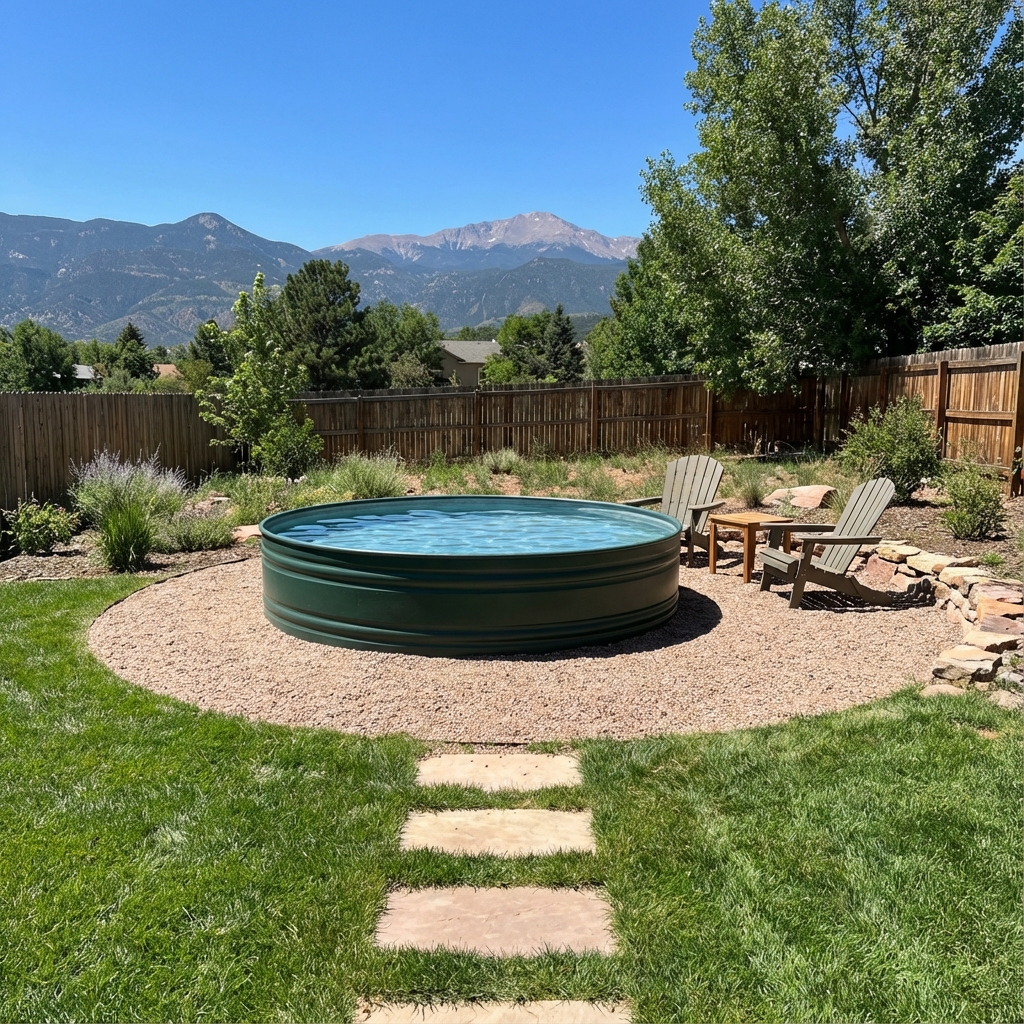
Denver Stock Tank Pool Guide: Costs, Suppliers, and Installation
Stock tank pools have become one of Denver's favorite backyard upgrades—and for good reason. These galvanized metal tubs, originally designed to water livestock, deliver a genuine pool experience at a fraction of the cost and timeline of traditional construction.
This guide covers everything you need to know about bringing one home: what you'll spend, where to buy tanks locally, how installation works, and what it takes to keep your water clean and swimmable through Colorado's intense summers.
What is a stock tank pool
A stock tank pool is simply a galvanized metal container—originally built to hold water for horses and cattle—repurposed as a backyard swimming pool. These sturdy steel tubs typically range from 6 to 10 feet in diameter and about 2 feet deep, making them ideal for cooling off on hot days rather than swimming laps.
The trend has picked up serious momentum across Colorado and the Western U.S. over the past few years, part of the broader above-ground pool market growing 5.10% annually as homeowners seek affordable alternatives. You might hear them called "cowboy pools," which makes sense given their ranching origins. What draws people to them? Mostly the combination of affordability, durability, and speed—you can go from bare backyard to functional pool in a single day instead of waiting months for traditional pool construction.
For Denver homeowners dealing with smaller yards, HOA restrictions, or tight budgets, stock tank pools offer a practical middle ground. They deliver genuine backyard relief from summer heat without the $50,000+ price tag and multi-month timeline of an in-ground pool.
How much does a stock tank pool cost in Denver
The total investment for a stock tank pool in Denver typically falls between $500 and $3,500, with the wide range reflecting the difference between a basic DIY setup and a professionally installed system with premium equipment.
Galvanized stock tank prices
The tank itself is your biggest single purchase. At Denver-area farm supply stores, galvanized stock tanks suitable for swimming run roughly $300 to $700. Round tanks in the 8-foot diameter range tend to cost less than oval tanks, which offer more lounging room but carry a higher price.
Pump and filtration costs
Without water circulation, your pool becomes a mosquito breeding ground within days. A basic pump and filter setup costs between $150 and $400, depending on quality and capacity. Small above-ground pool pumps work well for most stock tanks, though frequent users often invest in more robust systems.
Water treatment and chemical costs
Plan for roughly $10 to $30 per month in ongoing water treatment. You'll use chlorine or an alternative sanitizer, pH balancers, and test strips to keep the water safe for swimming. One thing worth noting: Colorado's hard water often requires additional treatments like a metal sequestrant to prevent staining on the galvanized surface.
Professional installation pricing
Going the professional route typically costs between $1,500 and $3,500 total. This price covers site preparation, plumbing connections, equipment setup, and initial water balancing. The higher upfront cost buys you expertise and often includes ongoing support—particularly valuable in Colorado, where high altitude creates unique water chemistry challenges.
Cost Component | DIY Range | Professional Installation |
|---|---|---|
Stock tank | $300–$700 | Included |
Pump and filter | $150–$400 | Included |
Fittings and plumbing | $50–$150 | Included |
Ground preparation | $50–$200 | Included |
Labor | $0 | $800–$1,500 |
Total | $550–$1,450 | $1,500–$3,500 |
Where to buy stock tanks in Denver
Denver has several local retailers carrying stock tanks, plus online options for those who prefer delivery. When shopping, look for tanks with smooth interior edges, no pre-drilled holes (unless you specifically want them), and solid structural integrity without dents or warping.
Tractor Supply Co
Tractor Supply operates multiple Denver metro locations, including stores in Aurora, Littleton, and Brighton. They carry CountyLine brand tanks in various sizes, and you can check inventory online before driving out.
Murdochs Ranch and Home Supply
This Colorado-based retailer has several Front Range locations with reliable stock tank inventory. Murdochs typically carries both round and oval galvanized tanks, and their staff can help load larger sizes into your truck.
Big R Stores
Big R locations around Denver stock galvanized tanks seasonally. Inventory varies by store, so calling ahead saves a wasted trip if you're looking for a specific size.
Online stock tank retailers
Companies like Behlen Country ship tanks directly to your home. However, freight costs for large metal containers add significantly to your total—sometimes $200 or more. Online ordering makes the most sense when local stores don't have your preferred size or during peak summer demand when shelves empty quickly.
Stock tank pool sizes and capacities
Picking the right size comes down to three factors: your available backyard space, how you plan to use the pool, and how many people will typically be cooling off together.
Round stock tanks
Round tanks range from 6 to 10 feet in diameter and hold approximately 300 to 700 gallons of water. They work well for smaller yards and are best suited for solo soaking or cooling off with one other person. The 8-foot round tank hits a sweet spot for most Denver backyards—big enough to be useful, small enough to fit comfortably.
Oval stock tanks
Oval tanks provide more surface area for lounging and can fit multiple adults more comfortably than round options. Common sizes hold 600 to 1,000+ gallons. The tradeoff is that they require more ground space and cost more than round tanks of similar capacity.
Choosing the right size for your backyard
Beyond the tank's footprint, plan for at least 2 to 3 feet of clearance on all sides for safe entry and exit. Weight is another consideration—a filled 8-foot round tank weighs approximately 4,000 pounds. Your ground surface has to handle that load without shifting or settling unevenly.
DIY vs professional stock tank pool installation
Both approaches work, and the right choice depends on your comfort with basic plumbing, your available time, and how much you want to spend upfront.
DIY installation saves money and offers the satisfaction of building something yourself. On the other hand, it requires a full weekend or more of work, basic plumbing knowledge, and sourcing all components separately—though complete DIY kits can simplify the process. Mistakes in ground preparation or water chemistry can lead to rust, leaks, or persistently murky water.
Professional installation costs more initially but delivers convenience and local expertise. In Colorado specifically, high altitude affects water chemistry in ways that catch first-timers off guard, and intense sun accelerates equipment wear. Professional installers familiar with Colorado conditions anticipate problems before they happen. Installers familiar with Front Range conditions anticipate problems before they happen.
Time investment: DIY takes a full weekend minimum, while professional installation typically completes in one day
Technical skills: DIY requires basic plumbing knowledge and some electrical understanding for pump hookup
Equipment sourcing: DIY means purchasing and coordinating multiple components from different suppliers
Support: Professional installers often include equipment warranties and ongoing maintenance guidance
How to build a DIY stock tank pool
For those going the DIY route with assembled components or sourcing materials individually, careful preparation prevents most common problems. Taking extra time with the foundation work pays off—fixing issues after the tank is filled and in use is far more difficult.
1. Choose a level location
Find a flat, stable area away from tree roots and underground utilities. Before digging anything, call 811 to locate buried lines. Avoid low spots where water naturally collects, since drainage problems can undermine your tank's foundation over time.
2. Prepare the ground surface
Placing a stock tank directly on bare soil traps moisture underneath and accelerates rust. Instead, create a base using compacted gravel, a sand pad, or a concrete slab. A 4-inch layer of compacted pea gravel works well for most installations—it provides stability while allowing water to drain away from the tank bottom.
3. Position and level the tank
Once your base is ready, set the tank in place and check all sides with a carpenter's level. Even small variations cause the water line to look uneven and can stress the tank walls over time. Add or remove gravel as needed until the tank sits perfectly level in all directions.
4. Install the pool pump and filter
Drill holes for inlet and outlet fittings using a step bit or hole saw. Then install bulkhead fittings—these are watertight connectors that pass through the tank wall—and connect your pump and filter according to manufacturer instructions. Seal all connections thoroughly, since even small leaks become big problems over time.
5. Fill the tank and balance water chemistry
Fill the tank with a garden hose, which typically takes 2 to 4 hours depending on size. Once filled, shock the water with chlorine and test pH levels. You're aiming for a pH between 7.2 and 7.6 and free chlorine between 1 and 3 ppm. At Denver's elevation, chlorine dissipates faster than at sea level, so plan to test frequently during your first few weeks until you learn how your pool behaves.
Essential stock tank pool equipment
Beyond the tank itself, several components keep your water clean and swimmable throughout the season.
Pool pumps for stock tanks
Choose a pump rated for your tank's water volume. Small above-ground pool pumps in the 1/4 to 1/2 horsepower range handle most stock tanks effectively. Submersible pumps offer simpler installation but typically don't circulate water as efficiently as external pumps.
Filtration systems
Cartridge filters are popular for stock tanks because they're compact and easy to maintain—you simply remove and rinse the cartridge every few weeks. Sand filters require less frequent maintenance but take up more space and cost more upfront.
Skimmers and drains
A surface skimmer removes floating debris like leaves and insects before they sink and decompose. For draining, you can install a bottom drain fitting or simply use a submersible pump when it's time to empty the tank for cleaning or winterization.
Stock tank pool heaters
Colorado evenings cool down quickly, even in July. Solar covers provide passive heating while reducing evaporation. For more active heating, small electric or propane heaters designed for above-ground pools can extend your swimming season into September or even early October.
Other accessories worth considering:
Pool ladder or wooden steps for easier entry
Floating thermometer to monitor water temperature
Pool cover to keep debris out overnight
Underwater LED lights for evening use
Stock tank pool maintenance in Colorado
Colorado's climate creates maintenance challenges you won't find in guides written for other parts of the country. Intense high-altitude sun, low humidity, and big temperature swings between day and night all affect water chemistry and equipment longevity.
Weekly cleaning tasks
Skim the surface daily if possible, or at least every few days. Brush the tank walls weekly to prevent algae from gaining a foothold, and check that your pump and filter are running properly. This simple routine—maybe 15 minutes total—keeps water clear and catches small problems before they grow.
Managing water chemistry at high altitude
Denver sits at 5,280 feet, where UV rays are 20-25% more intense than at sea level. That extra UV breaks down chlorine faster, meaning you'll add sanitizer more often than lower-elevation guides suggest. Test your water at least twice weekly. Evaporation also runs high in Colorado's dry air, so expect to top off water levels regularly.
Winterizing your stock tank pool
Most Denver owners drain their tanks before the first hard freeze, storing pumps and filters indoors to prevent damage. Alternatively, you can leave the tank filled with a winter cover, though you'll want to protect all plumbing from freezing temperatures. The galvanized steel tank itself handles Colorado winters without issue—it can stay outdoors year-round.
Backyard stock tank pool upgrades
Once your basic setup runs smoothly, a few upgrades can make the space more attractive and functional.
Decking and surrounds
A wood deck platform, gravel patio, or flagstone surround transforms a utilitarian tank into a genuine backyard feature. Beyond aesthetics, a proper surround provides a clean, comfortable surface for getting in and out of the pool.
Steps and pool ladders
Stock tanks sit about 2 feet tall, which makes climbing in and out awkward without some assistance. Wooden steps, metal pool ladders, or stairs built into a surrounding deck all solve this problem while adding visual appeal.
Lighting and aesthetic features
Underwater LED lights, string lights overhead, or solar lanterns around the perimeter create an inviting atmosphere after dark. Simple lighting additions extend your enjoyment well past sunset and make the space feel more intentional.
Getting started with your Denver stock tank pool
Whether you tackle the project yourself with supplies from local retailers or prefer a professional installation, a stock tank pool can transform your Denver backyard faster than you might expect.
For those who want the finished result without the weekend project, Splashkit offers free consultations and completes installations in a single day—handling everything from delivery through your first swim.
Request a custom installation quote
FAQs about stock tank pools in Denver
Do I need a permit for a stock tank pool in Denver?
Most stock tank pools fall below Denver's permit thresholds due to their shallow depth and small footprint. However, regulations vary across metro-area municipalities, so checking with your local building department before installation is a good idea.
How long do galvanized stock tank pools last?
With proper ground preparation and balanced water chemistry, galvanized stock tanks typically last 5 to 10 years or more as backyard pools. The zinc coating protects against rust, though acidic water or direct soil contact can shorten that lifespan considerably.
Can I use a stock tank pool year-round in Colorado?
The tank itself can remain outdoors year-round without damage. However, most Denver owners drain or cover their pools during winter to protect pumps, filters, and plumbing from freeze damage.
Will a stock tank pool rust in Denver's climate?
Galvanized steel resists rust effectively when water chemistry stays balanced and the tank sits on a protective base rather than bare soil. Keeping pH in the proper range prevents the acidic conditions that accelerate corrosion.
How deep is a typical stock tank pool?
Most stock tanks used as pools measure approximately 2 feet deep. That depth works well for cooling off, lounging, and relaxing, but isn't suitable for diving.