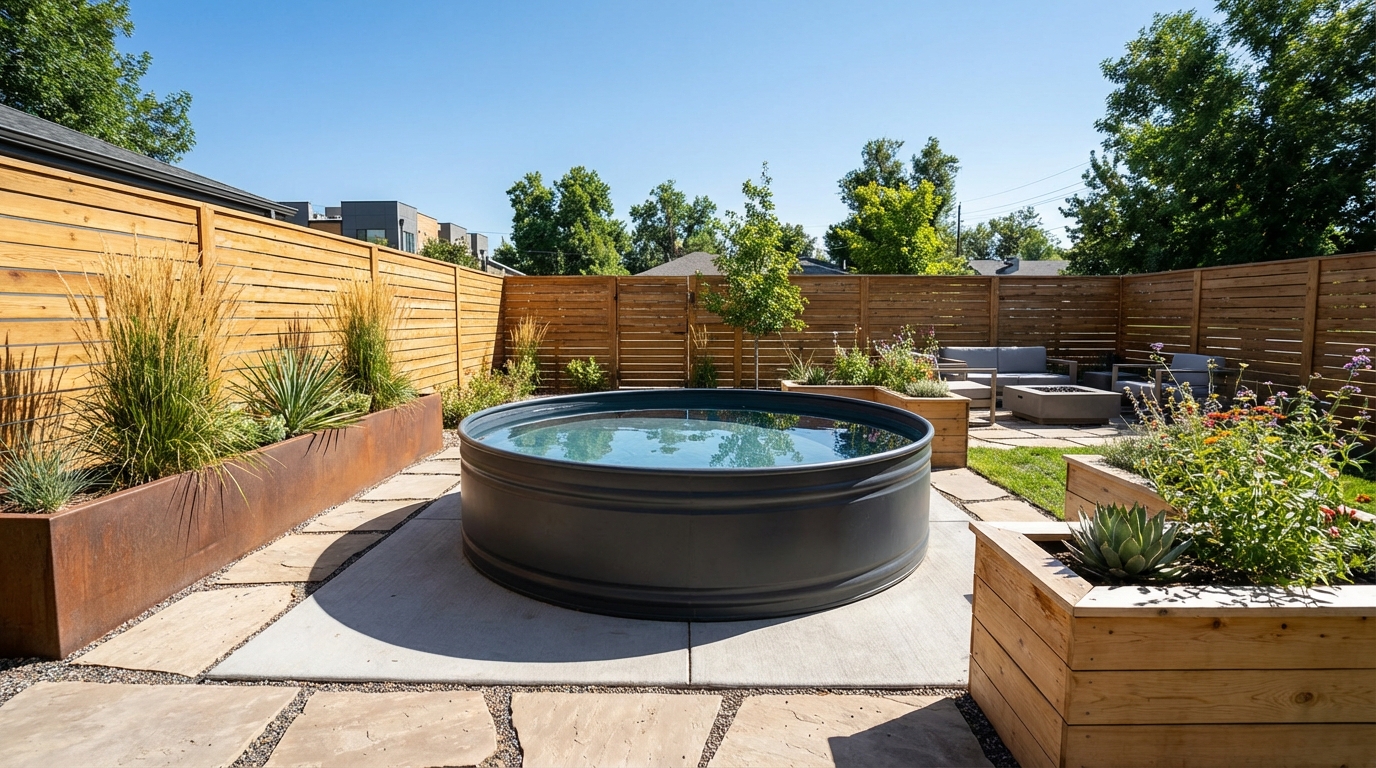
Complete Guide to Stock Tank Pool Costs and Pricing
A stock tank pool can cost anywhere from $300 for a bare-bones DIY setup to over $5,000 for a fully installed package with heating and accessories—a fraction of the $66,000 average cost for traditional in-ground pools. That's a wide range—and the final number depends entirely on decisions you haven't made yet.
This guide breaks down exactly where your money goes, compares DIY versus professional installation costs, and covers the ongoing expenses that catch first-time pool owners off guard.
How much does a stock tank pool cost
A stock tank pool costs anywhere from $300 for a basic DIY setup to over $5,000 for a professionally installed package with all the extras. Most people land somewhere in the middle, spending $500 to $2,000 if they build it themselves or $2,500 to $4,500 for a complete turnkey installation.
The price swings so widely because stock tank pools aren't one-size-fits-all. A 6-foot galvanized tank from a farm supply store costs a fraction of what you'd pay for a 10-foot poly tank with professional plumbing, a heater, and custom decking. Your final number depends on three main factors: tank size, material choice, and whether you're doing the work yourself or hiring someone.
Here's a quick look at what different approaches typically cost:
DIY stock tank pool: $300–$1,500 for the tank, pump, fittings, and startup chemicals
Professional installation: $2,000–$5,000+ for delivery, setup, filtration, and initial water treatment
Monthly maintenance: $20–$50 for chemicals, filter cartridges, and electricity
Stock tank pool cost breakdown
When you start pricing out a stock tank pool, you'll quickly notice that the tank itself is only part of the equation. Filtration, site prep, and installation labor all add to the total. Understanding where your money goes helps you decide which components are worth splurging on and where you can save.
A turnkey installation—where a company handles everything from delivery to filling the pool—bundles all of the individual costs into one package. This approach costs more upfront but removes the guesswork entirely.
Stock tank pool prices by size
Tank diameter affects price more than any other single factor. Bigger tanks cost more to manufacture, ship, and fill with water. They also require larger pumps and more chemicals to maintain.
Tank Size | Best For | Approximate Tank Cost |
|---|---|---|
6ft round | Solo soaking, small patios | $200–$400 |
8ft round | Couples, compact backyards | $350–$600 |
10ft round | Families, entertaining guests | $500–$900 |
The 8-foot tank hits a sweet spot for most homeowners. It holds two adults comfortably, fits on a standard deck, and doesn't require industrial-strength equipment to filter and heat.
Galvanized vs poly tank costs
Stock tanks come in two main materials, and each has tradeoffs worth considering.
Galvanized steel tanks feature that classic corrugated farmhouse look and typically run $200–$600 depending on size. The zinc coating protects against rust, though scratches to the interior can eventually lead to corrosion if left untreated.
Polyethylene tanks—usually called poly tanks—cost $400–$900 but eliminate rust concerns entirely. The material is lighter, easier to move, and often lasts longer. However, poly tanks lack the rustic aesthetic that draws many people to stock tank pools in the first place.
Site preparation costs
The ground beneath your tank matters more than you might expect. An uneven base creates pressure points that can warp the tank walls or cause the whole setup to shift over time.
Proper site prep involves clearing the area, leveling the ground, and adding a 2–4 inch layer of sand or pea gravel for drainage. On flat, accessible yards, this work might cost nothing beyond a few hours of your time. Rocky or sloped terrain—common throughout Colorado—can add $100–$500 for professional grading.
Professional installation costs
Professional installation packages typically include the tank, filtration system, delivery, and complete setup. You're paying for expertise and speed: installers who've done hundreds of pools can finish in a single day what might take you several weekends.
In high-altitude areas like Colorado, professional installers often select equipment specifically rated for intense UV exposure and the unique water chemistry challenges that come with elevation. The extra cost buys you confidence that everything works correctly from day one.
Cost to DIY a stock tank pool
Building your own stock tank pool means sourcing each component separately and handling the plumbing connections yourself, though complete DIY kits can simplify the process. The upfront savings are real, but so is the learning curve.
You'll spend time researching pump sizes, figuring out bulkhead fitting placement, and troubleshooting leaks. For handy homeowners who enjoy weekend projects, this process can be satisfying—joining the 43% of homeowners who tackle renovations solely themselves. For everyone else, it can turn into a frustrating series of hardware store trips.
Here's what a typical DIY build requires (or consider a DIY kit with everything included):
Stock tank: $200–$900 depending on size and material
Pump and filter: $60–$300 for a basic cartridge filtration system
Plumbing fittings: $30–$75 for bulkhead fittings, hoses, and adapters
Sealant and hardware: $20–$40 for waterproof sealant and mounting supplies
Base materials: $50–$150 for sand, gravel, or pavers
All told, most DIY builds land between $400 and $1,400. Mistakes and do-overs can push that number higher, and you'll invest several weekends before your first swim.
DIY vs professional stock tank pool installation
The choice between DIY and professional installation comes down to how you value your time and how comfortable you are with basic plumbing work.
Factor | DIY | Professional |
|---|---|---|
Upfront cost | $400–$1,400 | $2,000–$5,000+ |
Timeline | 2–4 weekends | One day |
Equipment sourcing | You handle it | Included |
Warranty | None | Usually included |
Risk of errors | Higher | Minimal |
DIY makes sense if you genuinely enjoy hands-on projects and have flexibility in your schedule. Professional installation works better when you want guaranteed results quickly—especially for rental properties where downtime costs money.
Tip: If you're in Colorado and want a one-day installation with ongoing support, request a custom quote from Splashkit to see what professional installation would cost for your property.
Stock tank pool add-on and accessory costs
The basic tank and pump get you swimming, but accessories can transform a simple stock tank into a genuine backyard retreat. None of the following are strictly necessary, though certain upgrades dramatically improve comfort and extend your season.
Pool heaters
A heater adds $800–$1,500 to your total cost but can extend your swimming season by several months. In Colorado, where mountain-fed tap water stays cold well into June and evening temperatures drop quickly, heated water makes a noticeable difference.
Propane heaters warm water quickly but require fuel refills. Electric heat pumps cost more upfront and heat more slowly, though they're cheaper to operate over time.
Pool covers
Covers keep debris out, retain heat overnight, and add a layer of safety between swims. Basic soft covers run $30–$75, while insulated foam versions cost $100–$200.
For families with young children or curious pets, a sturdy cover provides peace of mind when the pool isn't in use.
Steps and benches
Entry steps ($50–$150) make climbing in and out easier, particularly for kids or anyone with mobility concerns. In-pool benches ($100–$300) create lounging spots where you can sit with water at chest level.
Custom cedar or redwood steps add a premium look that complements the rustic tank aesthetic.
Filtration and pump upgrades
Basic cartridge pumps handle occasional use just fine, but upgraded sand or DE (diatomaceous earth) filters manage heavier traffic with less maintenance. If you plan to use your pool daily or host frequent gatherings, better filtration—typically $200–$500 more—pays for itself in time saved cleaning.
Ongoing stock tank pool maintenance costs
The purchase price gets you into the water, but ongoing expenses keep you there. Planning for maintenance costs helps you budget realistically for the full swimming season.
Chemical and water treatment
Stock tank pools require the same basic chemistry as any pool: sanitizer (chlorine or bromine), pH balancers, and occasional algaecide. The good news is that smaller water volume means smaller chemical bills.
Plan on $15–$30 monthly for chemicals during swimming season—significantly less than traditional pools which require $300 to $600 annually just for chemicals. Test strips—about $10–$15 for a season's supply—help you monitor levels without guesswork.
Electricity and operating costs
Your pump runs several hours daily to circulate and filter the water. Depending on pump size and local electricity rates, expect an extra $10–$25 on your monthly power bill.
Heaters increase costs significantly. Regular heating can add $50–$100 monthly, which is why many owners heat only for specific occasions rather than maintaining a constant temperature.
Repairs and replacement
Galvanized tanks eventually develop rust, typically after 3–7 years depending on how well you maintain them. Rust-inhibiting sprays and interior sealants ($20–$50 annually) extend lifespan considerably.
Pump motors usually last 2–5 years before needing replacement. Budget $60–$150 for a new pump down the road, or invest in higher-quality equipment upfront.
How to save money on your stock tank pool
A few smart decisions during the planning phase can reduce both upfront and long-term costs without sacrificing your swimming experience.
Right-size your tank: An 8-foot tank costs less to buy, fill, heat, and maintain than a 10-foot—and fits most backyards comfortably
Start simple: Skip the heater initially and add one next season if you find yourself wanting warmer water
Maintain consistently: Weekly chemical checks and filter cleaning prevent expensive problems later
Shop seasonal sales: Fall installations often come with discounts as demand drops
Bundle services: Professional packages typically cost less than buying each component separately
Why professional stock tank pool installation is worth the investment
While DIY appeals to budget-conscious homeowners, professional installation offers advantages that often justify the higher price—particularly in challenging environments.
Professional installers select equipment rated for local conditions and understand how factors like altitude affect water chemistry. They handle site prep, ensure proper drainage, and stand behind their work with warranties. What might take you three weekends happens in a single day.
For rental property owners, the math often favors professional installation. A properly installed pool generates revenue immediately, while a DIY project that leaks or underperforms costs both money and guest satisfaction.
Request a custom installation quote to see exactly what a turnkey stock tank pool would cost for your property.
FAQs about stock tank pool costs
What are the downsides of a stock tank pool?
Stock tank pools offer limited depth (typically 24–28 inches) and diameter compared to traditional pools, making them better for cooling off than swimming laps. Galvanized models require rust prevention, and all stock tanks need regular chemical balancing just like conventional pools.
Do stock tank pools require a fence?
Fencing requirements vary by municipality and typically depend on water depth rather than pool type. Most jurisdictions require barriers around pools deeper than 18–24 inches. Check with your local building department before installation.
How long does a stock tank pool last?
With proper maintenance, galvanized steel tanks typically last 5–10 years before rust becomes a significant issue. Poly tanks often exceed 10–15 years since they don't corrode. Regular cleaning, balanced chemicals, and protective coatings all extend lifespan.
Can stock tank pools stay up year-round in cold climates?
Yes, though winterization protects your investment. In freeze-thaw climates, drain the pump and plumbing lines, protect the filter, and either partially drain the tank or use a floating de-icer to prevent ice damage. Many owners find spring startup easier than complete teardown each year.