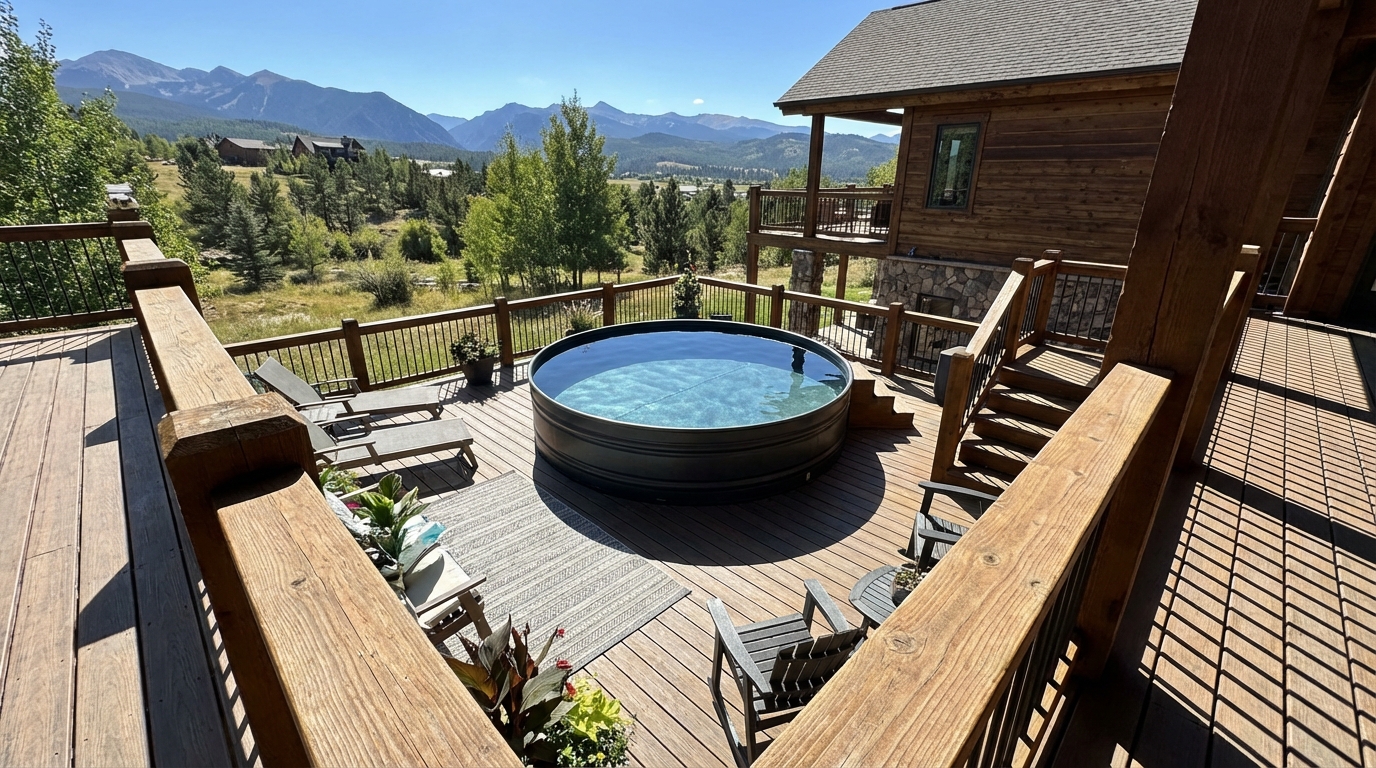
Cowboy Pool Site Prep: Complete Step-by-Step Guide
A filled cowboy pool weighs several thousand pounds—roughly the same as a compact car sitting in one spot on your lawn. Without proper site prep, that weight shifts unevenly, warping tank walls and creating the kind of problems that turn a fun backyard project into an expensive headache.
Getting the foundation right takes some effort upfront, but the payoff lasts for years. This guide walks through everything from choosing the right location and leveling techniques to base materials, drainage planning, and common mistakes that trip up first-time installers.
What is cowboy pool site prep
Cowboy pool site prep is the process of creating a perfectly level, solid base before installing a stock tank pool. This foundation typically consists of compacted decomposed granite or crushed gravel laid 2-3 inches thick, extending at least one foot beyond the tank's edge in all directions. The goal is simple: support the enormous weight of a filled pool—often several thousand pounds—while preventing the shifting and settling that leads to problems down the road.
Why does this matter so much? When a base isn't level, water distributes unevenly inside the tank. This creates visible waterline differences that look strange, but more importantly, it places uneven stress on the tank walls. Over time, this stress can warp the metal or cause premature failure at the seams.
Proper site prep also addresses drainage. Without a permeable base that allows water to escape, moisture gets trapped beneath the tank. This trapped moisture accelerates rust on the bottom of your pool and can undermine the stability of your foundation. Taking time to prepare the site correctly prevents these issues before they start.
Tools and materials you need for cowboy pool site prep
Gathering everything before you start saves trips to the hardware store and keeps your momentum going once you begin, though comprehensive DIY kits can simplify this process.
Hand tools
A round-point shovel handles most digging work, while a flat shovel spreads base materials more evenly. You'll also want a heavy-duty landscape rake, a hand tamper for compacting soil in tight spots, and a four-foot carpenter's level. Measuring tape, wooden stakes, and string line help you mark out your work area accurately.
Power equipment
A plate compactor makes the biggest difference in your finished results. Available at most equipment rental centers for around $50-75 per day, this machine compacts soil and base materials far more effectively than hand tamping. If you're removing established lawn, a sod cutter strips grass quickly and cleanly. A sturdy wheelbarrow moves soil and gravel without wearing you out.
Base materials
Your finished surface layer will be either decomposed granite or crushed gravel—more on choosing between them later. Calculate enough material to cover your prep area at 2-3 inches deep after compaction. Landscape fabric placed beneath the base helps prevent weeds from growing up through your gravel, though many installations skip this step without issues.
Safety gear
Work gloves protect your hands during digging and material handling. Safety glasses guard against debris when running the plate compactor. Closed-toe shoes with good traction keep you stable on loose gravel. And since site prep often takes a full day outdoors, sunscreen and a hat make the work more comfortable.
How to choose the best location for your cowboy pool
Before any digging begins, picking the right spot in your yard sets you up for success. A few key factors influence this decision.
Sun exposure and shade
Full sun warms your pool water naturally throughout the day, which can reduce or eliminate the need for a heater. However, in Colorado's intense summer sun, some afternoon shade keeps water temperatures comfortable rather than bathwater-hot. Partial shade also slows algae growth, meaning less chemical maintenance. Walk your yard at different times to see how sunlight moves across potential locations.
Proximity to electrical outlets
Your cowboy pool pump requires electricity to run, and most filtration systems work best when positioned within six feet of the power source. Look for existing outdoor outlets with GFCI protection—those are the outlets with "test" and "reset" buttons on the face. If your ideal spot lacks convenient power, factor in the cost of having an electrician add an outlet.
Distance from trees and debris
Trees drop leaves, seeds, pollen, and small branches directly into uncovered water. Every bit of debris means more skimming and filter cleaning. When possible, position your pool away from overhanging branches. You'll appreciate this choice every time you skip a maintenance session.
Ground slope and natural drainage
Low spots in your yard collect rainwater after storms, and placing a pool there creates ongoing drainage headaches. On the other hand, a gentle slope nearby actually helps when you eventually drain the pool for cleaning or winterization. The easiest way to identify problem areas is to walk your yard after a good rain and note where water pools.
How to level ground for a cowboy pool
This is where the real work happens. Taking your time through each step pays off for years to come.
Step 1. Mark the pool area
Drive wooden stakes at the corners of a square that extends at least one foot beyond your tank's diameter on all sides. For an 8-foot diameter tank, you're marking out roughly a 10-foot square. Run string line between the stakes to create a visible boundary. This extra space gives your base material room to support the tank edges and provides access for pump placement and maintenance.
Step 2. Remove grass and vegetation
Strip away all sod, roots, and organic material down to bare mineral soil. Organic matter—grass, roots, leaves—decomposes over time, creating voids and uneven settling beneath your pool. A sod cutter makes quick work of established lawns, though a flat shovel handles smaller areas just fine. Don't rush this step; any vegetation left behind will cause problems later.
Step 3. Excavate high spots
Here's a counterintuitive tip: dig down the high spots rather than filling in the low areas. Compacted native soil provides a more stable foundation than loose fill material ever will. Work systematically across your marked area, checking frequently with your level. Remove soil from high points until the entire area sits at roughly the same elevation.
Step 4. Compact the soil
Run a plate compactor over the entire prepared area, making multiple passes in different directions. The vibration settles soil particles together, creating a firm base that achieves the 95% compaction density needed to prevent further compression under weight. If you're using a hand tamper instead, expect a serious arm workout—and plan for extra time. Proper compaction prevents the ground from settling unevenly once thousands of pounds of water sit on top.
Step 5. Check for level
Lay a long, straight 2x4 board across your prepared surface and place your level on top. Check from multiple angles: side to side, front to back, and diagonally across corners. Water doesn't lie about level, so any variation you miss now will show up as an uneven waterline later. Adjust remaining high or low spots until the bubble reads center from every direction.
Best base materials for a stock tank pool
Once your ground is level and compacted, you'll add a surface layer of base material. Each option has trade-offs worth considering.
Material | Drainage | Stability | Cost | Best For |
|---|---|---|---|---|
Decomposed granite | Excellent | High | Moderate | Most installations |
Crushed gravel | Excellent | High | Low | Budget projects |
Concrete pad | Poor | Highest | High | Permanent setups |
Paver stones | Good | High | High | Aesthetic appeal |
Sand | Poor | Low | Low | Not recommended |
Decomposed granite
Decomposed granite—sometimes called DG—is finely crushed stone that packs firm when compacted and moistened. It drains waell, looks clean, and remains the most popular choice among stock tank pool owners. The material compacts into a solid surface while still allowing water to percolate through. Aim for 2-3 inches of depth after compaction.
Crushed gravel
Crushed gravel costs less than decomposed granite and performs nearly as well. Smaller aggregate sizes, around 3/8 inch or less, compact more tightly than larger stones. The texture feels rougher underfoot compared to DG, which matters if you plan to walk around the pool barefoot.
Concrete pad
An existing concrete patio can work well for cowboy pool placement, though you'll want to verify the surface is truly level first. Many patios slope slightly away from the house for drainage, which creates problems for pool installation. Pouring new concrete specifically for a pool adds significant cost and requires several days of curing time before you can place the tank.
Paver stones
Pavers create an attractive, finished look around your pool area. The installation requires a properly prepared sand base beneath the pavers and precise leveling during placement. While more labor-intensive than gravel options, the aesthetic results appeal to homeowners who want their pool area to feel like an intentional outdoor living space.
Sand
Despite seeming like a natural choice, sand performs poorly as a primary base material. It shifts under heavy weight and retains moisture against the tank bottom. This combination promotes rust and creates uneven settling within weeks. Use sand only as a thin leveling layer beneath pavers, never as your main foundation.
Drainage considerations for cowboy pool installation
Water management extends beyond the pool itself. Splash-out during use, overflow from rain, and eventual draining for maintenance all send water somewhere. Planning ahead prevents soggy yards and frustrated neighbors.
Think about where water will flow when you empty your pool for cleaning or winterization. A nearby slope that directs water away from your home's foundation works well. Some homeowners install a French drain—a gravel-filled trench with a perforated pipe—to handle larger volumes. Others dig a simple dry well, which is essentially a hole filled with gravel that allows water to slowly percolate into the ground.
Local regulations sometimes govern where pool water can drain, particularly if you're using chlorine or other treatment chemicals. A quick call to your local building department clarifies any restrictions before you finalize your site plan.
How to prepare electrical for a cowboy pool pump
Safe, reliable power keeps your filtration system running and your water clean. Understanding the electrical requirements helps you plan your installation properly.
GFCI outlet requirements
All outdoor pool equipment requires GFCI protection. GFCI stands for ground fault circuit interrupter—a safety device that instantly cuts power if it detects electrical current flowing through water or a person, mandatory for outlets within 20 feet of any pool. This protection can prevent serious injury or death from electrical shock. Most modern outdoor outlets include GFCI protection, indicated by the "test" and "reset" buttons on the outlet face.
Extension cord safety
Outdoor-rated extension cords can work as a temporary solution, but they're not ideal for permanent installations. If you use one, choose a cord rated for outdoor use with adequate wire gauge—12-gauge or heavier for runs over 25 feet. Never bury extension cords underground or run them through areas where water collects. And never use indoor extension cords outside, even temporarily.
When to hire an electrician
Adding a dedicated outdoor circuit provides the safest, most reliable power source for your cowboy pool pump, especially since the 2020 NEC update requires all pool pump motors be GFCI-protected. A licensed electrician can install a new GFCI outlet close to your pool location, properly rated for outdoor use and compliant with local building codes. In Colorado, where codes can be stricter due to altitude and weather considerations, professional installation ensures your setup passes inspection.
Common cowboy pool site prep mistakes to avoid
Learning from others' missteps saves time, money, and frustration. Here are the errors that trip up most first-time installers:
Skipping the level check. Even small variations become obvious once the pool fills. Water creates a perfectly horizontal line, so any tilt in your base shows up immediately as an uneven waterline.
Using topsoil as base. Organic material in topsoil compresses and shifts over time, creating uneven settling within weeks of installation.
Making the prep area too small. Your base material needs to extend beyond the pool edges for proper support. Cutting corners here leads to edge instability and difficult pump placement.
Ignoring drainage. Standing water beneath the tank accelerates rust on the bottom and undermines your foundation's stability.
Rushing compaction. Loose base material settles unevenly under the weight of a filled pool. If you don't compact thoroughly, you may end up starting over.
DIY site prep vs professional cowboy pool installation
Both approaches can deliver excellent results, though they suit different situations and skill levels.
DIY site prep works well for homeowners comfortable with physical labor and basic construction principles. You'll save on labor costs while gaining detailed knowledge of your installation. The trade-off is time—expect to spend a full weekend on site prep alone—and the learning curve that comes with any new project. Mistakes can be costly to fix once you've filled the pool and discovered problems.
Professional installation eliminates guesswork and typically includes site prep as part of the total package. Experienced installers have seen dozens of yards and know how to handle unexpected challenges like rocky soil or drainage issues. They bring the right equipment and complete the work efficiently.
This matters especially in challenging environments. Colorado's rocky soil, dramatic temperature swings, and high-altitude conditions require specific expertise. What works in Texas or Arizona may not perform the same way at 5,000 feet elevation.
Why one-day professional installation saves time in Colorado
Colorado presents unique challenges that professional installers handle routinely. Rocky soil requires different excavation approaches than sandy or clay-based ground. Temperature variations—sometimes 40 degrees in a single day—demand equipment and materials engineered for these conditions. High altitude affects everything from water chemistry to pump performance.
Professional teams arrive with the right tools, materials, and experience to complete site prep, delivery, and setup in a single visit. What might take a homeowner an entire weekend happens in hours, with the confidence that comes from specialized expertise. For many Colorado homeowners, the time savings alone justify the investment.
Request a custom installation quote to see how professional installation compares for your specific situation.
FAQs about cowboy pool site prep
How much does cowboy pool site prep cost?
DIY site prep typically runs $100-300 for materials and equipment rental, depending on your yard's existing condition and your chosen base material. Professional installation packages generally include site prep in the total price, bundling the work into one comprehensive cost.
Is a permit needed for a cowboy pool?
Most jurisdictions don't require permits for above-ground stock tank pools, since they're considered temporary structures. However, pools holding more than a certain water volume—often 5,000 gallons—may trigger permit requirements in some areas. A quick call to your local building department confirms the rules for your location.
How long does cowboy pool site prep take?
Plan for a full weekend if you're handling site prep yourself, including time for material pickup and multiple compaction passes. Professional installers typically complete prep and full installation within a single day, often in just a few hours.
Can you install a cowboy pool directly on grass?
Installing directly on grass leads to problems quickly. The organic material beneath the tank decomposes, creating voids and uneven settling. Trapped moisture accelerates rust on the tank bottom. Within a few weeks, you'll likely notice the pool sitting unevenly and may see rust forming at the base.
What size area do you need for cowboy pool site prep?
Prepare an area extending at least one foot beyond your tank's diameter on all sides. For a standard 8-foot diameter stock tank, this means a prep area roughly 10 feet across. The extra space supports the tank edges and provides room for pump placement and maintenance access.
How do you winterize a cowboy pool site?
Drain the pool completely before freezing temperatures arrive. Remove your pump and filtration equipment and store them indoors where they won't freeze. Cover the empty tank or move it to a protected area to prevent weather damage during winter months.